 kingpdc





product search
search
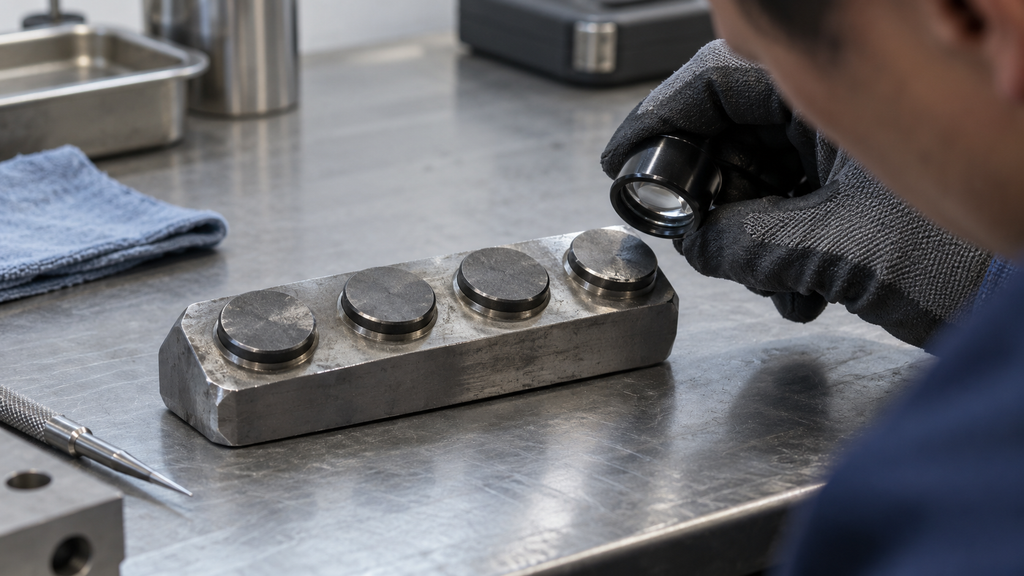
“Dull grading” describes the condition recorded after a bit is pulled from the well. “Bit grading” can also mean a product grade, quality rating, or performance comparison. For a PDC bit that has completed a run, the dull report records its post-run condition; it is not a pass-or-fail grade for a new bit.
The dull condition is an observed result. A failure mode describes how the bit did not meet its target, while a root cause points to the underlying load or event that produced the result. These are related, but they are not interchangeable. Normal wear is still a dull condition and does not by itself prove abnormal failure. Whether the wear is acceptable depends on the footage drilled, operating time, rate of penetration, reason for pulling the bit, and job objective.
The 2026 IADC framework supports recording individual cutters when per-cutter data is available. A record can identify the blade, cutter pocket, and bit region, and describe damage severity, diamond damage, and substrate damage. If a cutter is missing, retain its original pocket number: location remains part of the assessment.
Zone summaries for the cone, nose, shoulder, and gauge show where damage is concentrated. Per-cutter records preserve local differences that a regional summary cannot fully represent. The two views complement each other. A chart or database should also identify the manual or schema version used, so fields from different versions are not treated as equivalent.
In the newer single-cutter framework, damage severity is expressed as the percentage of the original diamond face area lost. The 0–8 mapping corresponds to 0%, about 5%, 20%, 30%, 50%, 62%, 80%, 95%, and 100%. It is not a linear division into eight equal parts: a grade of 4 corresponds to roughly 50% face-area loss.
Legacy fixed-cutter reports commonly use eight fields and summarize inner- and outer-row condition. Their 0–8 rating is generally expressed in eighths of cutting-structure loss. Although both systems display values from 0 to 8, the scale meaning and recording level differ. Do not combine or directly compare them until the report versions and field definitions are clear.
Read each code together with the observed shape. CW describes damage limited to the chamfer. WC refers to smooth wear with a distinct linear cutting edge. SC is angular spalling of the diamond face that does not extend into the substrate. DC means the diamond layer is partly or fully separated from the substrate. LC indicates that neither the cutter nor its substrate remains in the pocket. These codes classify observed damage; they do not, on their own, establish when it formed or what caused it.
A cutter code also cannot stand in for the condition of the whole bit. Bit-body erosion, mud packing, plugged areas, gauge loss, or pocket damage can affect how cutter condition is interpreted. A single post-run photo may support a visual classification, but it cannot establish root cause by itself. Relate cutter position, severity, and morphology to the available drilling parameters, formation, vibration, hydraulics, and sequence over time. Without those links, keep the conclusion at the level of observed wear or damage.
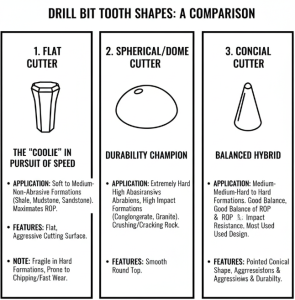
Avoid Costly Mistakes. This Article Shows You How To Match PDC Cutter Shape & Grade To Any Formation For Peak ROP.
View details
Learn How Pcd Structure, Grain Size, Cobalt Content, Thermal Behavior, And Interfaces Affect Polycrystalline Diamond Properties And Pdc Cutter Selection.
View details
Master PDC Bit Dull Grading For Peak Tool Life. Use Expert Wear Analysis To Cut Drilling Costs And Stop BHA Failures.
View details
PDC bits are the core drilling tools in the fields of oil drilling, geological exploration...
View details