 kingpdc





product search
search
When surplus PCD inserts are mixed together in photos, first ask the seller to group them by their complete model numbers, and then request a reinspection of the actual inserts intended for shipment. You should only consider purchasing the entire batch when the model numbers, quantities, and evidence of the cutting edge condition can be accurately matched to the delivery batch, and after both parties have agreed on how to handle non-conforming items upon arrival. If the evidence covers only a small number of inserts, limit your trial order to this verified portion. If even the trial order items cannot be identified or reinspected, or if the seller refuses your mandatory acceptance conditions, abandon the batch.
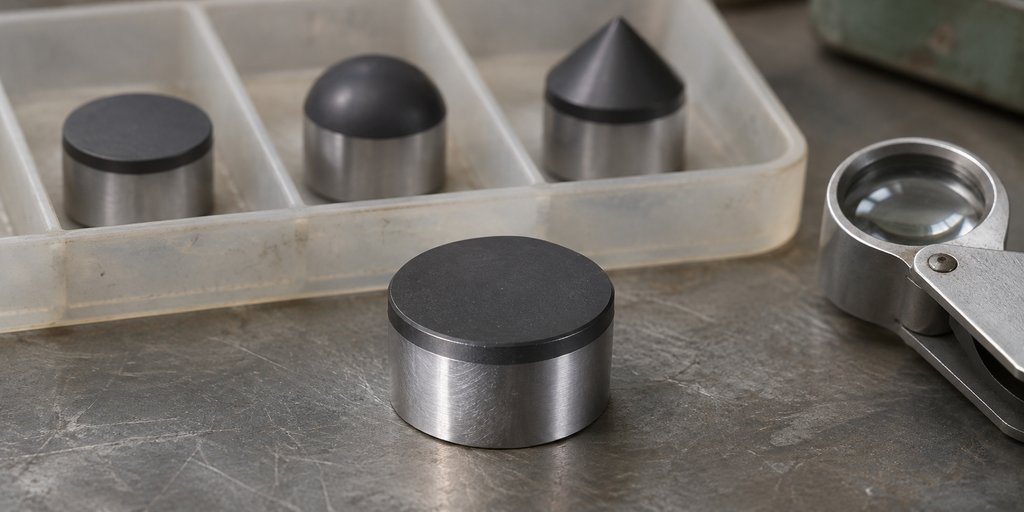
Polycrystalline Diamond, abbreviated as PCD, is a cutting tool material composed of many bonded diamond grains. When purchasing PCD inserts, in addition to confirming the insert model, you must also verify the grade and the cutting edge specifications that affect usage. Even among PCD inserts of the same type, the nose radius, chamfer, and edge preparation may vary. Original manufacturer specification data (such as Sandvik Coromant insert specification data) can help you verify your ordering requirements.
For mixed surplus stock, model verification and cutting edge reinspection must be conducted separately. Box labels can only serve as a reliable basis for identification if they correspond directly to the physical items. If the seller can only provide photos of a few box labels but cannot clarify which box the loose inserts came from, list these loose inserts as “pending confirmation” and temporarily deduct them from the purchasable quantity. Even after the model number has been verified, you still need to check whether the agreed-upon working edges and corners have any chipping, visible cracks, or wear.
Ask the seller to first separate the intended delivery inserts by complete model number, assign a number to each group, and list the quantities. Next, agree on which working edges and corners are to be inspected, what magnification equipment will be used, and what defects constitute non-conformance. Have the seller first send a set of close-up photos that clearly show the cutting edges. If reflections, poor focus, or angles obscure the working edges, ask the seller to retake them, and then determine whether this method is viable for subsequent acceptance inspections.
| Evidence Provided by the Seller | What Can Be Determined from It |
| Panoramic photos of mixed inserts, box label photos | Can be used for preliminary inventory and label identification. If box labels cannot be matched with loose inserts, the model of the loose inserts remains unconfirmed. |
| Close-up photos of cutting edges matching group and item numbers | Can determine whether the photographed area has visible defects under agreed inspection conditions. A photo of only one corner covers only that specific corner. |
| Grouped sampling records (specifying total quantity, sampling method, actual number inspected, and results) | Can determine whether the sampled inserts are conforming. The sampling method reveals whether this record can justify accepting the entire group. A few pieces hand-picked by the seller can only serve as evidence for those specific items. |
| Piece-by-piece reinspection records matching the packaged items for delivery | Can verify the reinspection results of each piece according to agreed criteria. If the records and physical items lose correspondence during shipping, the piece-by-piece reinspection loses its value as a basis for verification upon arrival. |
Photos and reinspection records only answer what can be seen under agreed-upon conditions. If your purchase depends on the actual surface finish post-machining or the tool life, use the test-cutting results as the determining factor for placing additional orders.
Purchasing the entire batch is suitable when model numbers can be clearly distinguished, records match the actual delivery, and the scope of acceptance aligns with your intended application. If every piece must meet agreed-upon cutting edge appearance conditions, demand a piece-by-piece reinspection and the removal of non-conforming items. If you are willing to accept the risk that uninspected items may still have defects, you can proceed with grouped sampling inspections. However, you must specify in advance how samples will be drawn from the delivery batch and whether finding non-conforming items will lead to expanded inspection, piece-by-piece screening, or outright rejection of that group.
Reducing to a trial order is suitable when the seller can only provide a small number of verifiable reinspected items, or if you still need on-machine verification. Ask the seller to separately bag and label the trial order items that passed reinspection, and list only these physical items in the order. If the purpose of the trial order is to decide on a larger follow-up purchase, also ask the seller to specify which group the remaining stock belongs to and whether it can be reinspected under the exact same conditions. A successful test cut can justify further evaluation of the remaining stock, but actual delivered items must still be inspected when you add to the order.
Abandoning the batch is the right choice when even the minimum trial order cannot be fulfilled. For instance, if the seller cannot confirm the complete model of the trial order items, mixes the inserts back into the original pile after photographing them, or demands payment prior to reinspection while you must confirm the cutting edges before paying. In such cases, shrinking the order merely reduces the quantity purchased; it fails to ensure the received inserts match your acceptance evidence.
Include the following four items in your order confirmation and ask the seller to reply to each point before making any payment:
You can start by sending a list grouped by complete model numbers, asking the seller to fill in the reinspectable quantity for each group, accompanied by a set of close-up cutting edge photos. Use this reply to determine which inserts can be officially included in the order, and then finalize the terms for upon-arrival reinspection and non-conformance handling.
Understand 4 1 2 Reg Pdc Bit Make Up Torque And Why Connection, Cutter Layout, Wob And Rpm Affect Torque.
View details
Explore The Drill Bit Well Pdc Guide. Learn How Shearing Action And Diamond Cutters Boost Rop And Durability In Water Wells.
View details
PDC (Polycrystalline Diamond Compact) cutters are integral components in drilling operations across a variety of industries, including oil and gas, mining, and construction. These advanced cutting tools are specifically engineered for hig...
View details
Discover How PDC Cutter Leaching Removes Cobalt To Stop Thermal Failure. Boosts Wear Resistance For Longer Bit Runs & Higher ROP.
View details