 kingpdc





product search
search
Monocrystalline and polycrystalline diamond tools share diamond as their working material, but their internal structures can lead to different edge behavior, wear patterns, and fracture paths. The comparison monocrystalline diamond vs polycrystalline needs one qualification: “polycrystalline” covers several material routes. A useful choice depends on the specific grade, tool construction, and operating conditions.
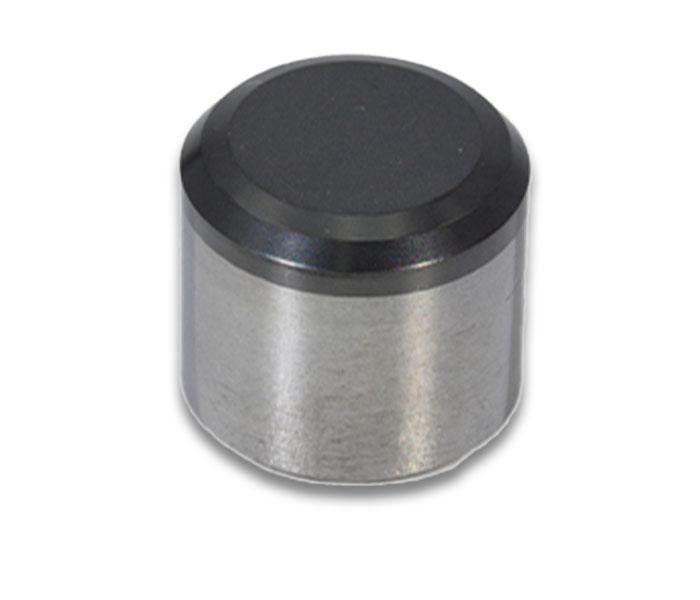
A single-crystal diamond has a continuous crystal lattice. Its behavior can vary with the crystal face and orientation. Polycrystalline diamond contains many grains with different orientations, but the label does not specify how the material was made or what it contains between the grains.
HPHT-sintered PCD may retain metal binder, such as cobalt, in intergranular channels. CVD polycrystalline diamond can have a grain-structure gradient from its nucleation side toward its growth side. Binderless nanopolycrystalline diamond is another distinct route without a conventional metal binder. These materials differ in structure, thermal behavior, machining, and joining; a property associated with one route should not automatically be applied to every polycrystalline product. In this article, “ordinary PCD” means common HPHT-sintered PCD unless stated otherwise.
Because single crystal has no grain boundaries or metal binder, it can be finished with a continuous edge and very small notches. This is useful in ultra-precision machining where surface finish and profile accuracy are priorities. Wear is still orientation-dependent: some crystal directions offer very high wear resistance, while others may wear more readily.
An ordinary PCD edge may show grain boundaries, pores, or small-scale grain pullout, so its finest edge is generally less continuous than that of premium single-crystal diamond. On the other hand, grains with different orientations can reduce the influence of one more wear-prone direction on overall wear behavior.
Coarse-grain PCD is often selected for wear-dominated service, although grain pullout can leave a larger edge notch. Fine-grain PCD can support a finer edge, while its wear and toughness still depend on the specific formulation. Grain size alone is not a complete ranking. Compare the required surface finish, abrasive wear, and acceptable edge damage under the actual operating conditions.
Single-crystal diamond has preferred cleavage planes. When the load is unfavorably oriented relative to those planes, the crystal may split rapidly along a particular plane. In polycrystalline diamond, a crack encountering grains with different orientations may deflect, branch, bridge, or blunt, changing its path.
That does not make PCD immune to chipping. Grain boundaries, pores, residual stress, and grain pullout can also contribute to edge failure. Hardness is not the same as fracture toughness or impact resistance, so neither “single crystal is always stronger” nor “polycrystalline is always tougher” is a reliable selection rule. Compare specific grades and microstructures using test conditions that resemble the service load.
Single-crystal diamond is used in high-precision work involving non-ferrous metals, some crystals, polymers, and optical molds when the crystal face and orientation suit the application. Ordinary HPHT PCD is commonly used where abrasive wear dominates and the cutting task also calls for some resistance to edge chipping. One material is not a universal upgrade over the other; their useful properties serve different priorities.
A drilling PDC cutter is a composite component, not a bare diamond insert. Its PCD working layer is bonded to a tungsten-carbide support, commonly a WC-Co substrate. The assembly must accommodate impact, multi-directional loading, and sustained wear. A single-crystal tool for precision machining is therefore not a default like-for-like replacement for a drilling PDC cutter.
Before comparing products, identify the polycrystalline route and grade: HPHT-sintered PCD, CVD material, or binderless polycrystalline diamond. Define the workpiece, required finish, dominant wear mode, and expected loading. For single crystal, specify the relevant face and orientation. Then compare performance data only when the grade, test method, temperature, and loading conditions are clear.
The meaningful answer depends on the application. A continuous precision edge may favor single crystal; an abrasive cutting task or a composite drilling cutter may call for a suitable PCD grade. The material route and tool design—not the name alone—determine which comparison applies.
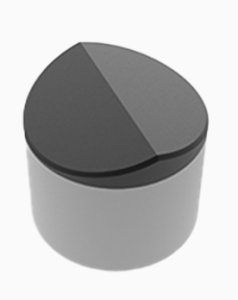
Improve ROP With The Latest PDC Cutter Technology. Expert Analysis On Deep Leaching, 3d Shapes, And Solving Bit Failure.
View details
Learn How To Verify 6 5/8 Reg Pdc Bit Torque For Makeup And Distinguish It From Torque Measured While Drilling.
View details
PDC bits are the core drilling tools in the fields of oil drilling, geological exploration...
View details
Master PDC Drill Bit Specifications: Body Type, Blade Count, Cutter Size & Hydraulic Design For Optimal ROP.
View details