 kingpdc




product search
search
This PDC Core Drill Bits is specially designed for coring operations in soft to medium hard formations (Platts hardness f = 3-10). It adopts Premium Grade 13mm/16mm polycrystalline diamond compact cutting teeth and uses shear failure principle to replace traditional grinding. It can achieve a mechanical drilling rate (ROP) 3-5 times higher than that of the pregnant drill bit and maintain a core adoption rate of more than 95% in the complete rock layer, batch mining is supported.
1308 / 1613 mm
Cutting tooth diameter:
tungsten carbide matrix/steel body
Matrix material:
API / DCDMA
Thread standard:
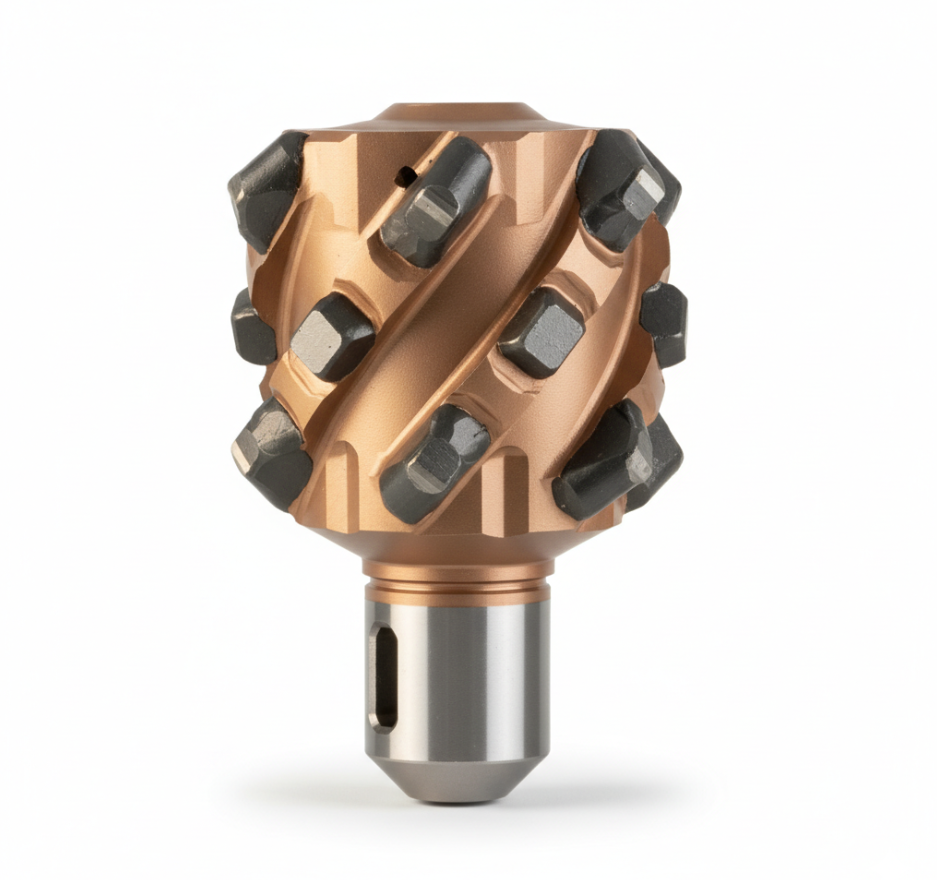

Using the “micro-cutting” mechanism of PDC cutters, the rate of penetration (ROP) can usually reach 3-6 m/h in shale, sandstone and limestone formations. Compared with the traditional impregnated diamond drill bit, the drilling efficiency is improved by about 300, which significantly shortens the drilling cycle and reduces the cost of drilling per meter.
Using high-quality PDC compact with thermal stability up to 750°C, the cutting teeth can continuously expose new sharp diamond layers during wear. This self-sharpening characteristic ensures that the drill bit maintains a stable cutting efficiency throughout its service life (an average of 3000-5000 meters, depending on the formation) without the need for frequent grinding like the impregnated drill bit.
Equipped with wide flow channel optimized by CFD simulation and 3-6 chip removal slots, with large flow surface outlet design. It can effectively cool the cutting teeth and quickly carry large particle cuttings back out of the orifice, completely solving the common problem of “bit Balling” in clay or mudstone layers, and reducing the frequency of stopping drilling and cleaning by 80%.
The outer diameter of the drill bit is inlaid with high wear-resistant polycrystalline diamond gauge teeth, and the spiral gauge design is adopted. Reduce the friction coefficient of the hole wall to less than 0.1, effectively prevent the hole diameter shrinkage, reduce the vibration of the drill string, reduce the core fracture rate by 40%, and ensure that a smooth and complete cylindrical core is obtained.
Although specializing in soft rocks, the bit can also cope with the intercalated hard layer with f = 10-12 by adjusting the back rake angle (usually 15 °-20 °). Compared with the surface embedded drill bit, its impact toughness is improved by 2 times, and tooth chipping is not easy to occur when encountering pebble layer or crushing zone.
The carcass type PDC drill bit is sintered with impregnated tungsten carbide powder, and the surface hardness reaches HRC 50-60. This kind of high erosion-resistant matrix can resist the erosion of high-speed drilling fluid, especially suitable for high abrasive sandstone formation. The life of the matrix is usually longer than that of cutting teeth, which supports many times of returning to the factory for tooth replacement maintenance.
| Parameter item | Specifications/Description | Notes |
| Standard Sizes | BQ, NQ, HQ, PQ, PQ3 | Compliant with DCDMA international standards |
| Cutter Size | 1308 (13mm), 1613 (16mm), 1913 (19mm) | Select based on the hardness of the formation |
| Blade Count | 3 – 6 wings | Few-bladed drills are suitable for fast drilling in soft rock, while multiple-bladed drills are suitable for hard rock. |
| Applicable lithology (Formation) | Mudstone, sandstone, limestone, shale, salt rock | Mohs hardness 3-7 (f < 12) |
| Body Material | Matrix Body / Steel Body | The tire body is wear-resistant, and the steel body is impact-resistant. |
| Back Rake | 15° – 25° adjustable | The larger the angle, the stronger the impact resistance; the smaller the angle, the faster the cutting speed. |
| Connection thread | API Regular, IF, or special core-taking tube thread | After high-frequency quenching treatment, it is fatigue resistant. |
| Recommended WOB (Working Weight on Drill) | 6 – 15 kN (depending on drill bit diameter) | Compared to impregnated diamond bits, it requires less drilling pressure. |
The PDC drill bit is cut and broken rock, the drilling speed is increased by 3-5 times and the drilling pressure is halved, the life is 4-5 times longer, there is no risk of shedding, the time spent on drilling is greatly reduced, and the comprehensive cost-effectiveness is significant.
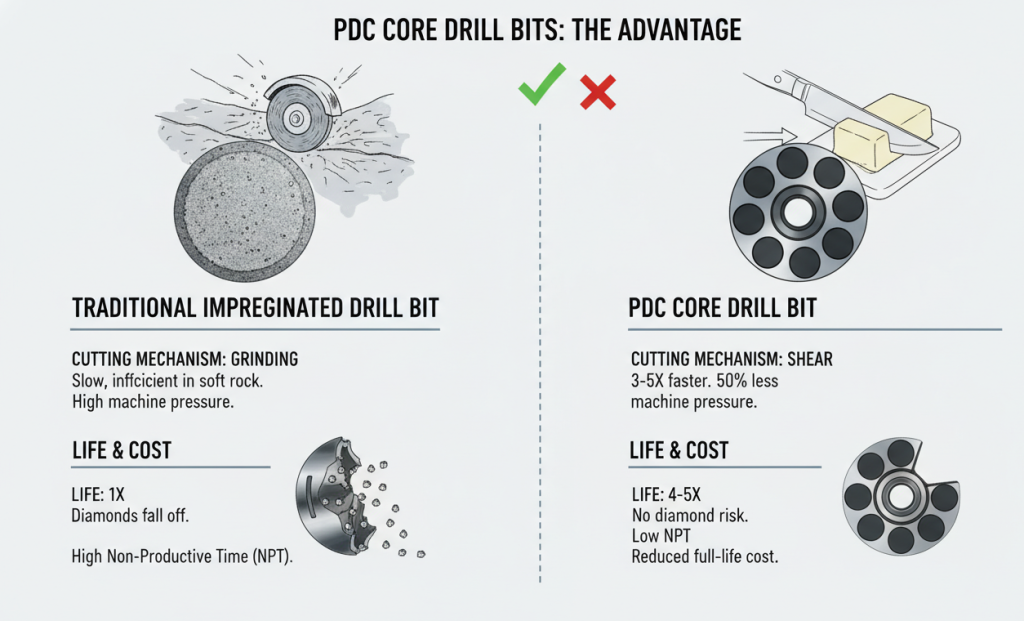

For deep holes over 1000 meters, the problem of frequent tripping out and changing heads due to short service life of ordinary drill bits is solved. The long-life characteristics of the PDC maximize the single-trip footage.
For the loose broken zone, the problem of high-pressure water flow directly washing away the core is solved. The surface water optimization design is adopted, and the water flow does not directly impact the core inlet to protect the integrity of the sample.
Aiming at the high abrasive formation such as quartz sandstone, the problem of drill sticking caused by rapid wear of drill outer diameter is solved. The high-density gauge tooth design ensures that the drilling diameter always meets API standards and avoids reaming operations.
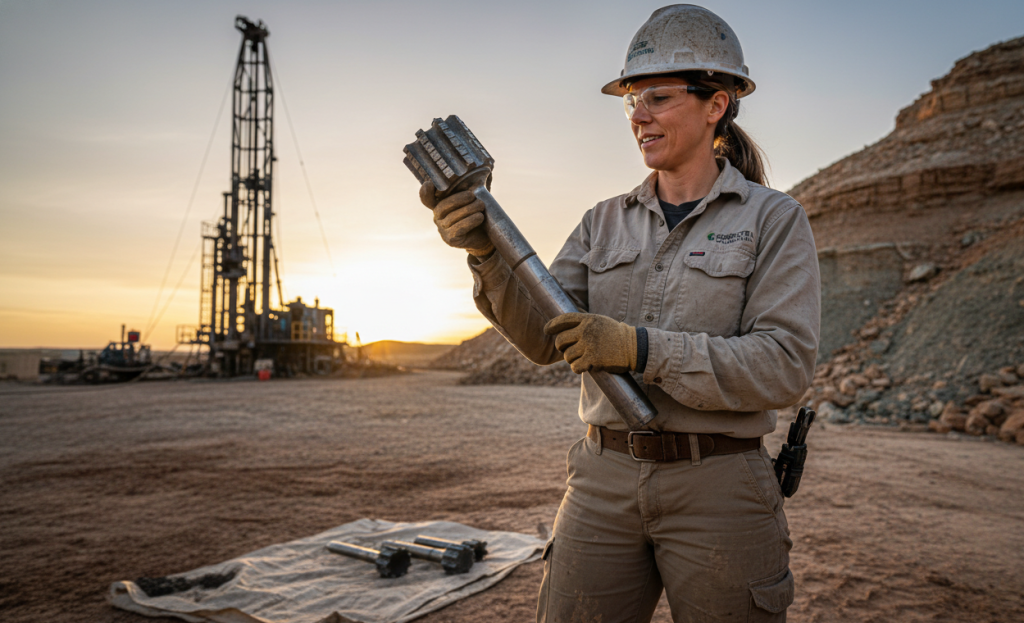
It is suitable for the exploration of coalfield, salt mine and sedimentary deposit. In these relatively soft sedimentary rocks, PDC core bits can obtain formation samples at the fastest speed, significantly shortening the overall cycle of the exploration project.
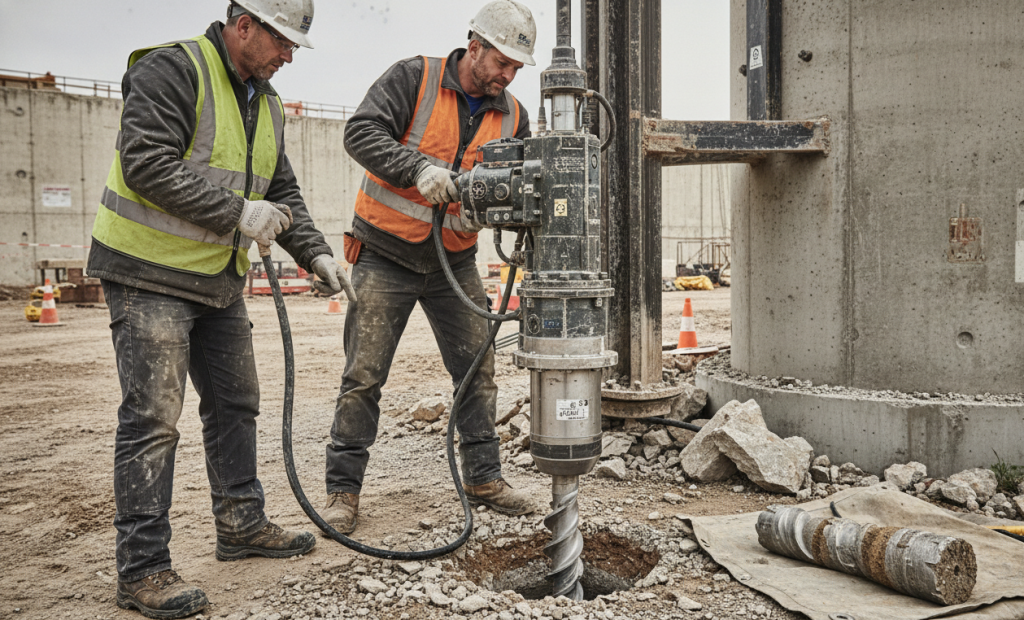
It is suitable for coring detection of dam foundation and bridge pile foundation. It is necessary to drill quickly in the overburden and weathered rock formation, and the PDC bit can well adapt to the formation of soil-rock interaction, reducing the trouble of bit replacement.
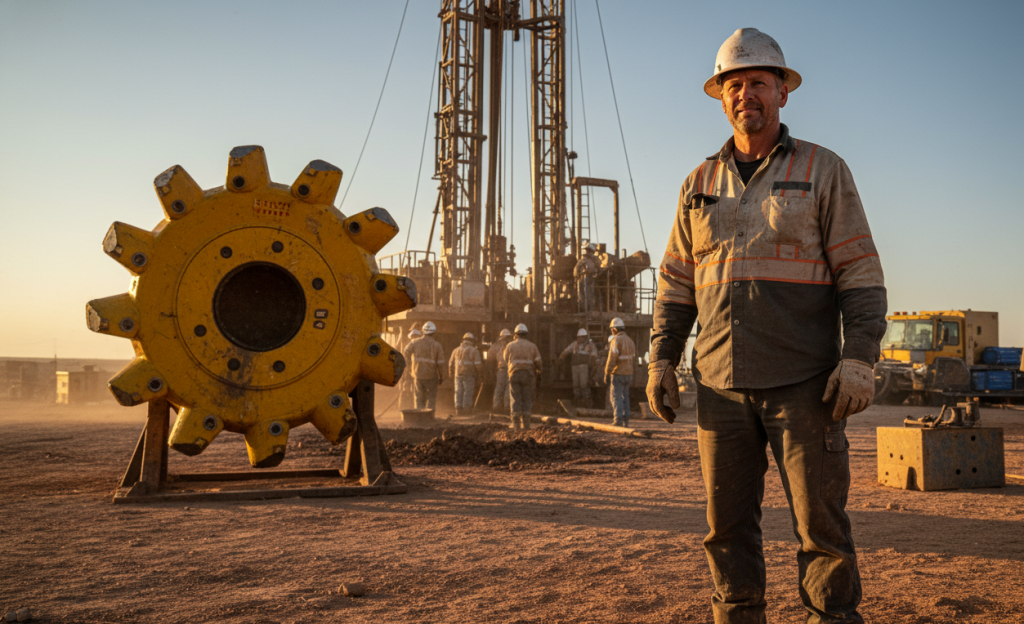
Suitable for shallow surface coring or soft formation guide hole drilling. Using the high drilling speed characteristic of PDC, it can quickly pass through the upper loose formation to gain valuable time for the subsequent casing operation.
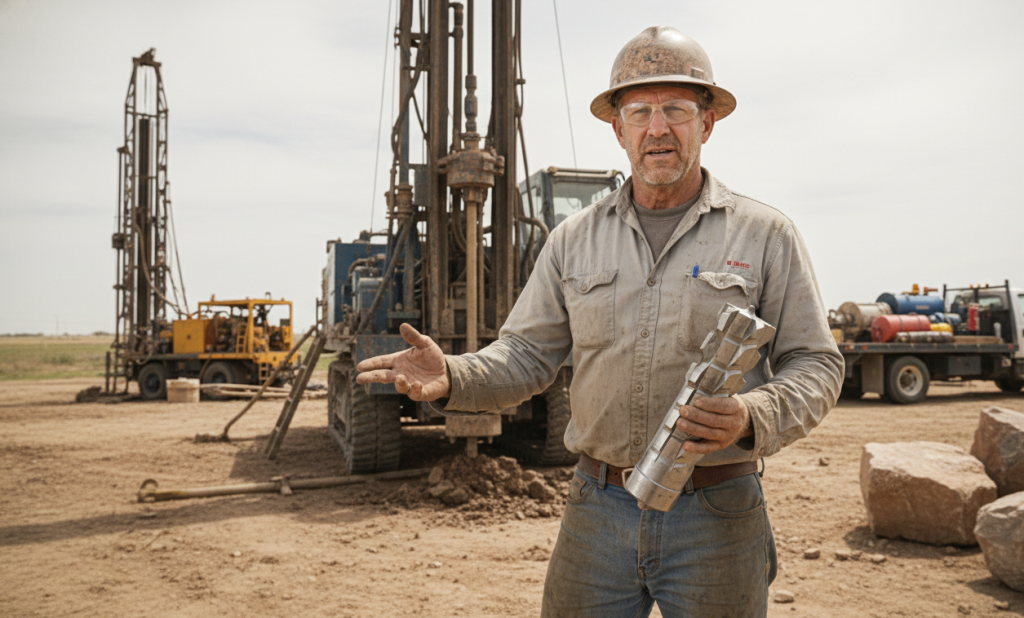
It is suitable for lithology analysis drilling of large diameter water wells. PDC Core Drill Bits performs well in mudstone and sandstone aquifers, and has relatively low torque and pressure requirements on drilling rigs, making it suitable for all types of small and medium-sized drilling rigs.
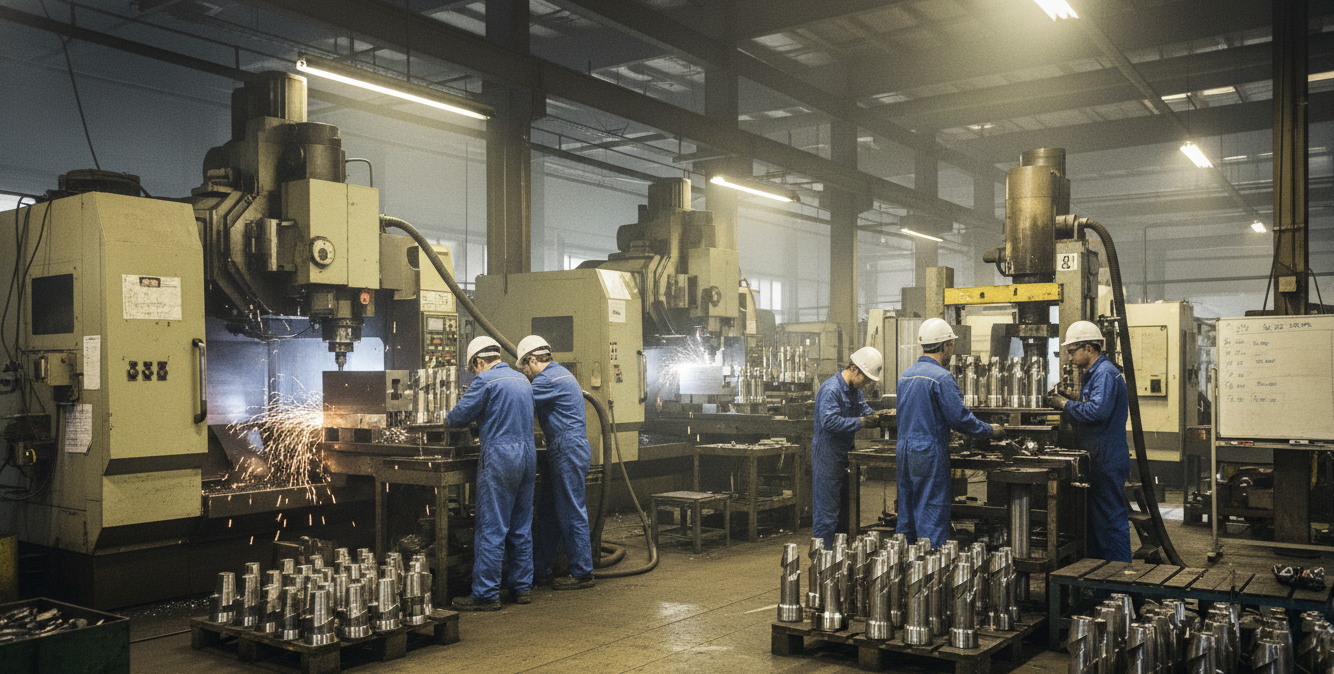
Our factory
A: It is most suitable for drilling soft to medium hard formation (Platts hardness f < 10), such as mudstone, shale, sandstone, limestone, etc. For granite and quartzite with extremely high hardness (f > 12) or high abrasiveness, it is recommended to use impregnated diamond drill bits, because hard rock is easy to cause PDC cutting teeth to crack.
A: The steel body drill bit is made of alloy steel, has good toughness, is suitable for complex and easy to collapse tooth formation, and is easy to repair and repair for many times. The matrix drill bit is sintered by tungsten carbide powder, with excellent wear resistance and strong erosion resistance, which is more suitable for high abrasive formation, but it is difficult to repair.
A: The speed should be immediately reduced (to 60-80 RPM) and the weight on bit should be reduced to prevent the cutting teeth from cracking due to severe impact. If the crushing zone is thick, it is recommended to replace it with a specially designed impact resistant PDC bit or use an impregnated drill bit to pass through the interval.
A: Yes, especially steel PDC bits. If only the cutting teeth are worn or fall off, and the drill bit body is intact, it can be returned to the factory for “tooth replacement” repair. Usually the repair cost is only 30%-40% of the new drill bit, which can significantly reduce the cost of use.
A: Rock breaking mechanism is different. The impregnated drill bit relies on “grinding” to break the rock, which is inefficient; PDC drill bit relies on “shovel/shear” to cut the rock, which has a large cutting depth. In soft rock, the cutting efficiency of PDC is usually more than 3 times that of impregnated drill bit.
A: The general principle is: the softer the formation, the larger the tooth (such as 19mm) is selected to obtain a higher drilling speed; the harder the formation, the smaller the tooth (such as 13mm or less) is selected to increase the tooth density and improve the impact resistance and stability.
This PDC Core Drill Bits is specially designed for coring operations in soft to medium hard formations (Platts hardness f = 3-10). It adopts Premium Grade 13mm/16mm polycrystalline diamond compact cutting teeth and uses shear failure principle to replace traditional grinding. It can achieve a mechanical drilling rate (ROP) 3-5 times higher than that of the pregnant drill bit and maintain a core adoption rate of more than 95% in the complete rock layer, batch mining is supported.
Cutting tooth diameter:
1308 / 1613 mm
Matrix material:
tungsten carbide matrix/steel body
Thread standard:
API / DCDMA
Using the “micro-cutting” mechanism of PDC cutters, the rate of penetration (ROP) can usually reach 3-6 m/h in shale, sandstone and limestone formations. Compared with the traditional impregnated diamond drill bit, the drilling efficiency is improved by about 300, which significantly shortens the drilling cycle and reduces the cost of drilling per meter.
Using high-quality PDC compact with thermal stability up to 750°C, the cutting teeth can continuously expose new sharp diamond layers during wear. This self-sharpening characteristic ensures that the drill bit maintains a stable cutting efficiency throughout its service life (an average of 3000-5000 meters, depending on the formation) without the need for frequent grinding like the impregnated drill bit.
Equipped with wide flow channel optimized by CFD simulation and 3-6 chip removal slots, with large flow surface outlet design. It can effectively cool the cutting teeth and quickly carry large particle cuttings back out of the orifice, completely solving the common problem of “bit Balling” in clay or mudstone layers, and reducing the frequency of stopping drilling and cleaning by 80%.
The outer diameter of the drill bit is inlaid with high wear-resistant polycrystalline diamond gauge teeth, and the spiral gauge design is adopted. Reduce the friction coefficient of the hole wall to less than 0.1, effectively prevent the hole diameter shrinkage, reduce the vibration of the drill string, reduce the core fracture rate by 40%, and ensure that a smooth and complete cylindrical core is obtained.
Although specializing in soft rocks, the bit can also cope with the intercalated hard layer with f = 10-12 by adjusting the back rake angle (usually 15 °-20 °). Compared with the surface embedded drill bit, its impact toughness is improved by 2 times, and tooth chipping is not easy to occur when encountering pebble layer or crushing zone.
The carcass type PDC drill bit is sintered with impregnated tungsten carbide powder, and the surface hardness reaches HRC 50-60. This kind of high erosion-resistant matrix can resist the erosion of high-speed drilling fluid, especially suitable for high abrasive sandstone formation. The life of the matrix is usually longer than that of cutting teeth, which supports many times of returning to the factory for tooth replacement maintenance.
| Parameter item | Specifications/Description | Notes |
| Standard Sizes | BQ, NQ, HQ, PQ, PQ3 | Compliant with DCDMA international standards |
| Cutter Size | 1308 (13mm), 1613 (16mm), 1913 (19mm) | Select based on the hardness of the formation |
| Blade Count | 3 – 6 wings | Few-bladed drills are suitable for fast drilling in soft rock, while multiple-bladed drills are suitable for hard rock. |
| Applicable lithology (Formation) | Mudstone, sandstone, limestone, shale, salt rock | Mohs hardness 3-7 (f < 12) |
| Body Material | Matrix Body / Steel Body | The tire body is wear-resistant, and the steel body is impact-resistant. |
| Back Rake | 15° – 25° adjustable | The larger the angle, the stronger the impact resistance; the smaller the angle, the faster the cutting speed. |
| Connection thread | API Regular, IF, or special core-taking tube thread | After high-frequency quenching treatment, it is fatigue resistant. |
| Recommended WOB (Working Weight on Drill) | 6 – 15 kN (depending on drill bit diameter) | Compared to impregnated diamond bits, it requires less drilling pressure. |
The PDC drill bit is cut and broken rock, the drilling speed is increased by 3-5 times and the drilling pressure is halved, the life is 4-5 times longer, there is no risk of shedding, the time spent on drilling is greatly reduced, and the comprehensive cost-effectiveness is significant.
For deep holes over 1000 meters, the problem of frequent tripping out and changing heads due to short service life of ordinary drill bits is solved. The long-life characteristics of the PDC maximize the single-trip footage.
For the loose broken zone, the problem of high-pressure water flow directly washing away the core is solved. The surface water optimization design is adopted, and the water flow does not directly impact the core inlet to protect the integrity of the sample.
Aiming at the high abrasive formation such as quartz sandstone, the problem of drill sticking caused by rapid wear of drill outer diameter is solved. The high-density gauge tooth design ensures that the drilling diameter always meets API standards and avoids reaming operations.
It is suitable for the exploration of coalfield, salt mine and sedimentary deposit. In these relatively soft sedimentary rocks, PDC core bits can obtain formation samples at the fastest speed, significantly shortening the overall cycle of the exploration project.
It is suitable for coring detection of dam foundation and bridge pile foundation. It is necessary to drill quickly in the overburden and weathered rock formation, and the PDC bit can well adapt to the formation of soil-rock interaction, reducing the trouble of bit replacement.
Suitable for shallow surface coring or soft formation guide hole drilling. Using the high drilling speed characteristic of PDC, it can quickly pass through the upper loose formation to gain valuable time for the subsequent casing operation.
It is suitable for lithology analysis drilling of large diameter water wells. PDC Core Drill Bits performs well in mudstone and sandstone aquifers, and has relatively low torque and pressure requirements on drilling rigs, making it suitable for all types of small and medium-sized drilling rigs.
A: It is most suitable for drilling soft to medium hard formation (Platts hardness f < 10), such as mudstone, shale, sandstone, limestone, etc. For granite and quartzite with extremely high hardness (f > 12) or high abrasiveness, it is recommended to use impregnated diamond drill bits, because hard rock is easy to cause PDC cutting teeth to crack.
A: The steel body drill bit is made of alloy steel, has good toughness, is suitable for complex and easy to collapse tooth formation, and is easy to repair and repair for many times. The matrix drill bit is sintered by tungsten carbide powder, with excellent wear resistance and strong erosion resistance, which is more suitable for high abrasive formation, but it is difficult to repair.
A: The speed should be immediately reduced (to 60-80 RPM) and the weight on bit should be reduced to prevent the cutting teeth from cracking due to severe impact. If the crushing zone is thick, it is recommended to replace it with a specially designed impact resistant PDC bit or use an impregnated drill bit to pass through the interval.
A: Yes, especially steel PDC bits. If only the cutting teeth are worn or fall off, and the drill bit body is intact, it can be returned to the factory for “tooth replacement” repair. Usually the repair cost is only 30%-40% of the new drill bit, which can significantly reduce the cost of use.
A: Rock breaking mechanism is different. The impregnated drill bit relies on “grinding” to break the rock, which is inefficient; PDC drill bit relies on “shovel/shear” to cut the rock, which has a large cutting depth. In soft rock, the cutting efficiency of PDC is usually more than 3 times that of impregnated drill bit.
A: The general principle is: the softer the formation, the larger the tooth (such as 19mm) is selected to obtain a higher drilling speed; the harder the formation, the smaller the tooth (such as 13mm or less) is selected to increase the tooth density and improve the impact resistance and stability.