 kingpdc




product search
search
Using unique non-planar interface bonding technology and deep cobalt removal process, this PDC bit cutter provides thermal stability up to 750°C and excellent self-sharpening, significantly improving the rate of penetration (ROP) and impact fatigue life of drill bits in hard rock formations, and undertaking wholesale business.
≥ 750°C
Heat resistance
>400 joules
Impact resistance
2.0-2.5mm
Layer thickness
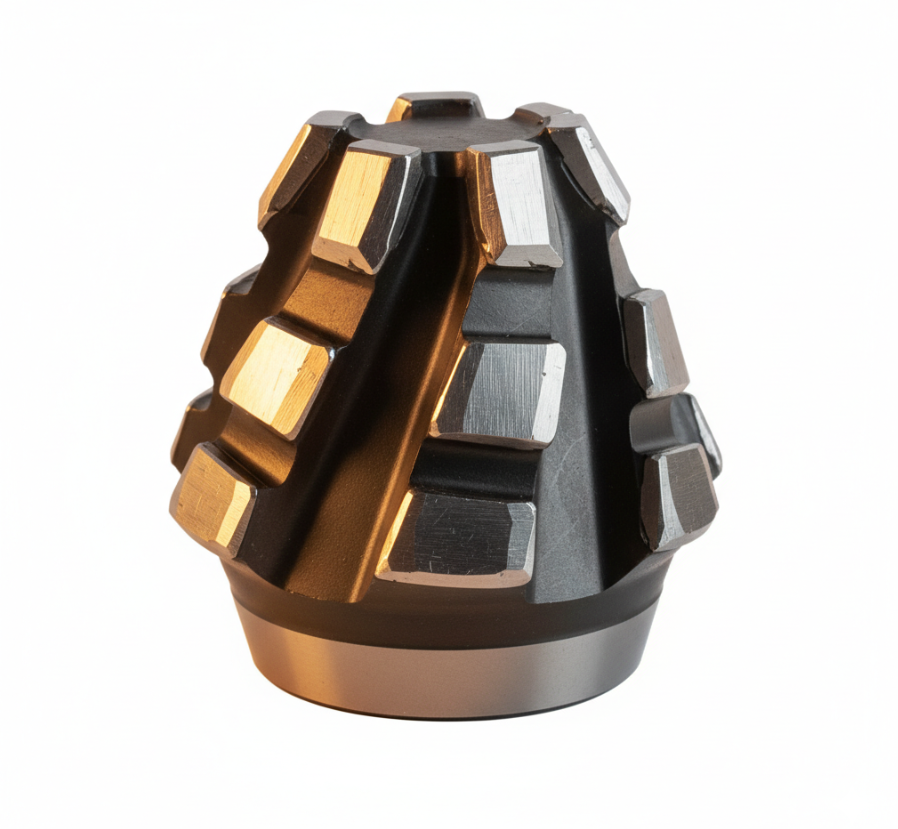

Using the patented ridge interface design, the bonding area of diamond layer and cemented carbide substrate is increased by 30%, the internal stress concentration is effectively eliminated, the shear strength is increased to more than 650 MPa, and the stratification phenomenon is fundamentally eliminated.
Through the deep decobalting treatment of 100-200 microns, the catalyst metal between the diamond grids is removed, and the critical point of thermal stability of PDC bit cutter is increased from 700°C to 750°C, and the hardness is still maintained during dry drilling or insufficient cooling.
Provide a 45 ° double chamfer design. Field tests have proved that the geometry can disperse 40% of the axial impact load and reduce the chipping rate by 60% when drilling into gravel or soft and hard cross formations.
Mix 2-30 micron multi-grain diamond powder, the sintering density reaches more than 96%. Compared with single particle size products, the wear resistance ratio is as high as 400: 1, which greatly prolongs the life of drill bit footage.
The surface roughness Ra of the composite sheet was controlled within 0.1 μm, and the friction coefficient was reduced to 0.05. This feature significantly reduces the friction and heat generation during cutting, and helps to quickly discharge the cuttings and prevent the mud from wrapping the drill bit.
Each piece of factory PDC bit cutter is C- Scan ultrasonic scanned to ensure that there are no micro cracks or voids (Pores) inside the diamond layer, ensuring the consistent performance of the batch product under the bottom hole pressure of 30,000 PSI.
| Type | Diameter | Height | Diamond layer height | Diamond chamfer size | Carbide chamfer size |
| OGF0808 | 8.00/8.20mm | 8.00mm | 2.0/2.5/ 3.0mm | 0.40mm×45° | 0.76mm×45° |
| OGF0813 | 8.00/8.20mm | 13.20mm | 2.0/2.5/ 3.0mm | 0.40mm×45° | 0.76mm×45° |
| OGF1008 | 10.00mm | 8.00mm | 2.0/2.5/ 3.0mm | 0.40mm×45° | 0.76mm×45° |
| OGF1013 | 10.00mm | 13.20mm | 2.0/2.5/ 3.0mm | 0.40mm×45° | 0.76mm×45° |
| OGF1308 | 13.44mm | 8.00mm | 2.0/2.5/ 3.0mm | 0.40mm×45° | 0.76mm×45° |
| OGF1313 | 13.44mm | 13.20mm | 2.0/2.5/ 3.0mm | 0.40mm×45° | 0.76mm×45° |
| OGF1608 | 15.88/16.10mm | 8.00mm | 2.0/2.5/ 3.0mm | 0.40mm×45° | 0.76mm×45° |
| OGF1613 | 15.88/16.10mm | 13.20mm | 2.0/2.5/ 3.0mm | 0.40mm×45° | 0.76mm×45° |
| OGF1908 | 19.05mm | 8.00mm | 2.0/2.5/ 3.0mm | 0.40mm×45° | 0.76mm×45° |
| OGF1913 | 19.05mm | 13.20mm | 2.0/2.5/ 3.0mm | 0.40mm×45° | 0.76mm×45° |
In deep and ultra-deep well drilling operations, ordinary composite sheets often fail early due to thermal degradation and impact fatigue. By optimizing the microstructure, our PDC bit cutter significantly improves toughness while maintaining high wear resistance, solving the contradiction between hardness and toughness in the industry.
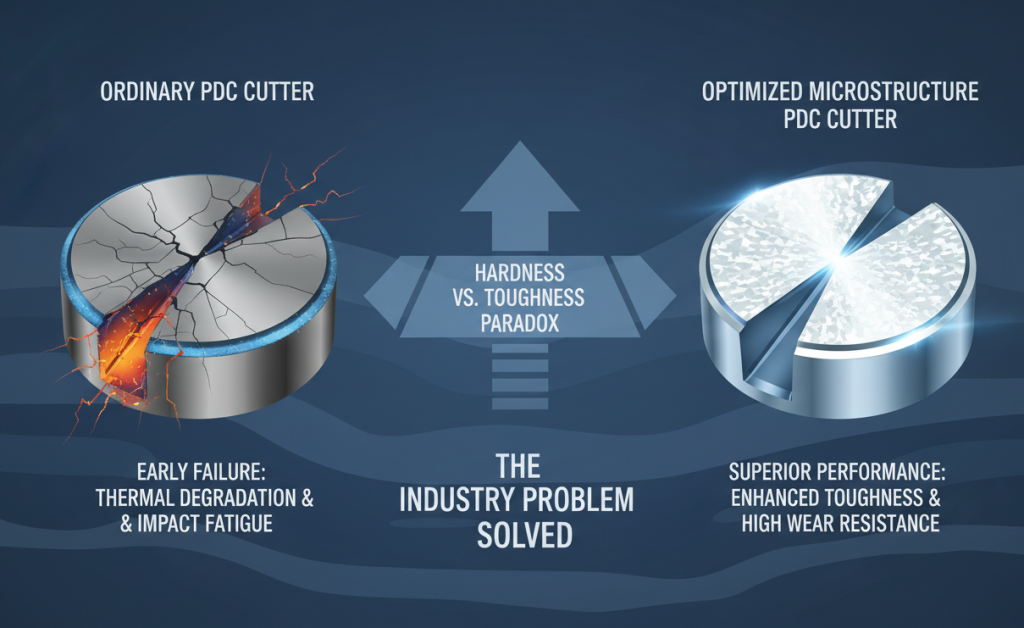

In view of the high frequency impact common in the operation of quartz sandstone or conglomerate layer, the high toughness matrix of this product with double chamfered edge design can absorb the energy generated by the vibration of the drill string, reduce the chipping rate of cutting teeth by 55%, and avoid the loss of hundreds of thousands of dollars of construction period caused by frequent tripping out and changing heads.
Common PDC teeth are prone to graphitization inversion for conditions where the bottom hole temperature exceeds 150°C and frictional heat generation is severe. Our deep cobalt removal technology removes the easily expandable cobalt catalyst, allowing the PDC bit cutter to maintain cutting sharpness at a high temperature of 750°C, solving the pain point of the drill bit's slow feed in long-section abrasive formations.
In view of the huge shear force generated during high torque drilling, the traditional flat-bottom joint surface is easy to peel off. This product adopts mesh claw interface, which increases the binding force between diamond layer and alloy matrix to 1.5 times of the industry average level, and completely solves the problems of bottom hole falling and bit scrapping caused by delamination of composite sheet.
It is suitable for producing 8 1/2 “to 17 1/2” steel body or matrix PDC bits, specially designed for long-section drilling of directional and horizontal wells, especially for medium-hard formations with drillability level of 4-7.

Suitable for the production of high-precision geological core bits. Our PDC bit cutter provides high cutting accuracy and wear resistance, ensuring complete core samples and extended bit life during granite or limestone sampling.
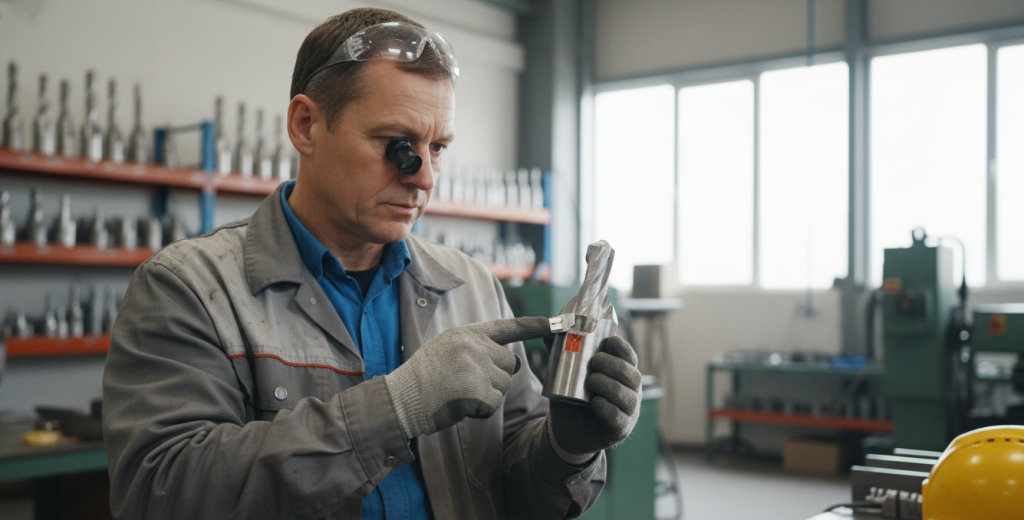
For the manufacture of reamers in horizontal directional drilling, the high impact resistance of this product can resist the impact of underground unidentified obstacles (such as pebble layer), and is an ideal tooth material for reaming tools for municipal pipe network laying and crossing engineering.

Suitable for repair factory of used drill bits or worn drill bits. The standardized dimensional tolerance (diameter ± 0.05mm) makes the process of replacing worn teeth more convenient and can restore more than 90% of the original cutting performance of the drill bit at a lower cost.
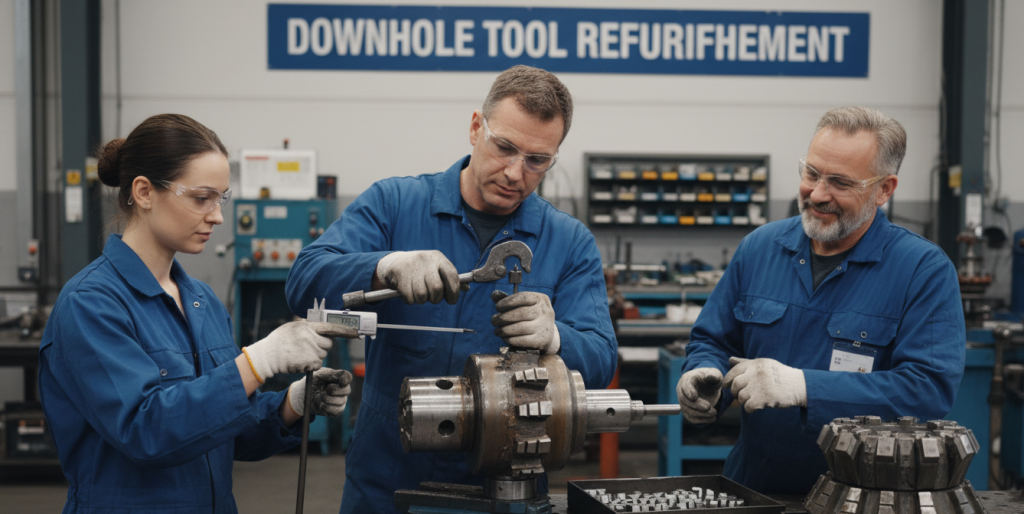

Use absolute ethanol or acetone to thoroughly clean the bottom of the PDC bit cutter and the drill hole to ensure that there is no oil, scale or dust residue. Cleanliness directly affects the wetting angle and bonding strength of the brazing seam to prevent virtual welding.

When using high-frequency induction brazing, the temperature must be strictly monitored. It is recommended that the maximum heating temperature should not exceed 720°C and the high temperature residence time should be controlled within 40 seconds to prevent thermal damage (graphitization) to the diamond layer.

It is recommended to use a low-temperature silver solder sheet with a silver content of 40%-50%, combined with a special fluorine-containing active flux. This ensures excellent flowability and permeability at lower temperatures to fill the interdental space.

After the welding is completed, it is strictly prohibited to immediately water or air cooling. The drill bit should be placed in asbestos powder or insulation box for slow cooling to release welding residual stress and prevent micro-cracks in the composite sheet.

certificate
Welcome to our Frequently Asked Questions page. We have compiled answers to common questions you may have, hoping to provide you with clear and quick solutions. If you cannot find the information you need here, please feel free to contact our customer support team.
Using unique non-planar interface bonding technology and deep cobalt removal process, this PDC bit cutter provides thermal stability up to 750°C and excellent self-sharpening, significantly improving the rate of penetration (ROP) and impact fatigue life of drill bits in hard rock formations, and undertaking wholesale business.
Heat resistance
≥ 750°C
Impact resistance
>400 joules
Layer thickness
2.0-2.5mm

Using the patented ridge interface design, the bonding area of diamond layer and cemented carbide substrate is increased by 30%, the internal stress concentration is effectively eliminated, the shear strength is increased to more than 650 MPa, and the stratification phenomenon is fundamentally eliminated.
Through the deep decobalting treatment of 100-200 microns, the catalyst metal between the diamond grids is removed, and the critical point of thermal stability of PDC bit cutter is increased from 700°C to 750°C, and the hardness is still maintained during dry drilling or insufficient cooling.
Provide a 45 ° double chamfer design. Field tests have proved that the geometry can disperse 40% of the axial impact load and reduce the chipping rate by 60% when drilling into gravel or soft and hard cross formations.
Mix 2-30 micron multi-grain diamond powder, the sintering density reaches more than 96%. Compared with single particle size products, the wear resistance ratio is as high as 400: 1, which greatly prolongs the life of drill bit footage.
The surface roughness Ra of the composite sheet was controlled within 0.1 μm, and the friction coefficient was reduced to 0.05. This feature significantly reduces the friction and heat generation during cutting, and helps to quickly discharge the cuttings and prevent the mud from wrapping the drill bit.
Each piece of factory PDC bit cutter is C- Scan ultrasonic scanned to ensure that there are no micro cracks or voids (Pores) inside the diamond layer, ensuring the consistent performance of the batch product under the bottom hole pressure of 30,000 PSI.
| Parameter item | Specifications/Description | Notes |
| Standard Sizes | BQ, NQ, HQ, PQ, PQ3 | Compliant with DCDMA international standards |
| Cutter Size | 1308 (13mm), 1613 (16mm), 1913 (19mm) | Select based on the hardness of the formation |
| Blade Count | 3 – 6 wings | Few-bladed drills are suitable for fast drilling in soft rock, while multiple-bladed drills are suitable for hard rock. |
| Applicable lithology (Formation) | Mudstone, sandstone, limestone, shale, salt rock | Mohs hardness 3-7 (f < 12) |
| Body Material | Matrix Body / Steel Body | The tire body is wear-resistant, and the steel body is impact-resistant. |
| Back Rake | 15° – 25° adjustable | The larger the angle, the stronger the impact resistance; the smaller the angle, the faster the cutting speed. |
| Connection thread | API Regular, IF, or special core-taking tube thread | After high-frequency quenching treatment, it is fatigue resistant. |
| Recommended WOB (Working Weight on Drill) | 6 – 15 kN (depending on drill bit diameter) | Compared to impregnated diamond bits, it requires less drilling pressure. |
In view of the high frequency impact common in the operation of quartz sandstone or conglomerate layer, the high toughness matrix of this product with double chamfered edge design can absorb the energy generated by the vibration of the drill string, reduce the chipping rate of cutting teeth by 55%, and avoid the loss of hundreds of thousands of dollars of construction period caused by frequent tripping out and changing heads.
Common PDC teeth are prone to graphitization inversion for conditions where the bottom hole temperature exceeds 150°C and frictional heat generation is severe. Our deep cobalt removal technology removes the easily expandable cobalt catalyst, allowing the PDC bit cutter to maintain cutting sharpness at a high temperature of 750°C, solving the pain point of the drill bit's slow feed in long-section abrasive formations.
In view of the huge shear force generated during high torque drilling, the traditional flat-bottom joint surface is easy to peel off. This product adopts mesh claw interface, which increases the binding force between diamond layer and alloy matrix to 1.5 times of the industry average level, and completely solves the problems of bottom hole falling and bit scrapping caused by delamination of composite sheet.
It is suitable for producing 8 1/2 “to 17 1/2” steel body or matrix PDC bits, specially designed for long-section drilling of directional and horizontal wells, especially for medium-hard formations with drillability level of 4-7.
Suitable for the production of high-precision geological core bits. Our PDC bit cutter provides high cutting accuracy and wear resistance, ensuring complete core samples and extended bit life during granite or limestone sampling.
For the manufacture of reamers in horizontal directional drilling, the high impact resistance of this product can resist the impact of underground unidentified obstacles (such as pebble layer), and is an ideal tooth material for reaming tools for municipal pipe network laying and crossing engineering.
Suitable for repair factory of used drill bits or worn drill bits. The standardized dimensional tolerance (diameter ± 0.05mm) makes the process of replacing worn teeth more convenient and can restore more than 90% of the original cutting performance of the drill bit at a lower cost.
Use absolute ethanol or acetone to thoroughly clean the bottom of the PDC bit cutter and the drill hole to ensure that there is no oil, scale or dust residue. Cleanliness directly affects the wetting angle and bonding strength of the brazing seam to prevent virtual welding.
When using high-frequency induction brazing, the temperature must be strictly monitored. It is recommended that the maximum heating temperature should not exceed 720°C and the high temperature residence time should be controlled within 40 seconds to prevent thermal damage (graphitization) to the diamond layer.
It is recommended to use a low-temperature silver solder sheet with a silver content of 40%-50%, combined with a special fluorine-containing active flux. This ensures excellent flowability and permeability at lower temperatures to fill the interdental space.
After the welding is completed, it is strictly prohibited to immediately water or air cooling. The drill bit should be placed in asbestos powder or insulation box for slow cooling to release welding residual stress and prevent micro-cracks in the composite sheet.