 kingpdc




product search
search
The drill bit well pdc uses high-quality polycrystalline diamond compact (PDC) and reinforced alloy matrix. By optimizing the arrangement of cutting teeth, the drill bit life can be prolonged by more than 40% while improving the rate of penetration (ROP). It is the core tool for deep well and complex hard rock drilling to reduce the comprehensive cost and support bulk procurement.
M221/M321/S123
IADC Code:
13mm/16mm/19mm
Cutting tooth size:
≤ 25,000 PSI
Applicable compressive strength:
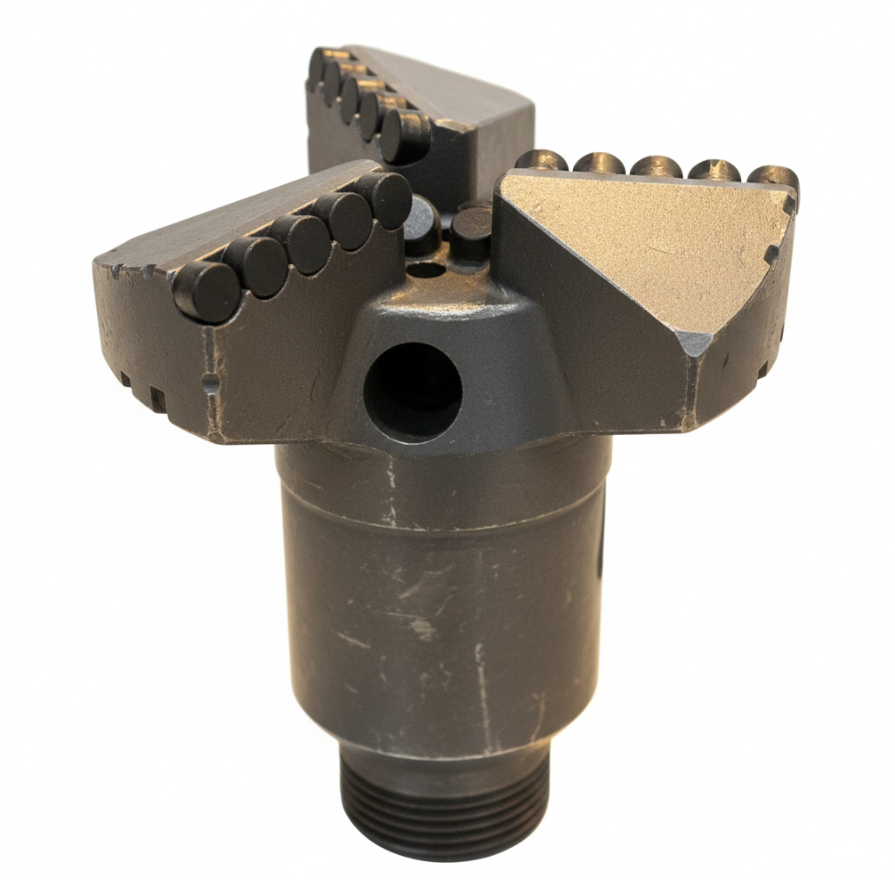

high-quality polycrystalline diamond layer with a layer thickness of 2.0-2.5mm is adopted, which improves wear resistance by 30%, ensures that the drill bit well pdc cutting edge is still sharp under high temperature and high friction environment, and reduces frequent drilling.
computer fluid dynamics simulation is carried out for nozzle layout to remove the debris accumulation at the bottom of the drill bit, effectively prevent the phenomenon of “mud-packed drill bit” caused by viscous formation, and keep drilling efficiency stable.
the diameter-preserving part is embedded with high-density tungsten carbide column and natural diamond, and the tolerance is controlled within the range of +0.02 “/-0” to ensure that the well diameter is still regular after long-distance drilling and reduce the difficulty of casing running in the later period.
double-row tooth structure is adopted in high-risk cutting areas to share single-tooth load, impact toughness is increased by 50%, and cracking of the composite sheet is prevented when dealing with uneven hardness strata or gravel layers.
steel body (Steel Body) or carcass (Matrix Body) two options. The matrix bit adopts impregnated tungsten carbide, which has strong erosion resistance and is suitable for corrosive fluid and highly abrasive sandstone formation.
the asymmetric layout of 3-8 blades tested by dynamic balance significantly reduces the radial vibration during rotation, so that the drill bit well pdc has more accurate tool surface control ability in directional drilling.
| Parameters | Specifications/Description | Industry standards/implementation standards |
| Product Specifications and Dimensions | 3 1/2″ (88.9mm) – 17 1/2″ (444.5mm) | Compliant with API Spec 7-1 standard |
| Number of blades | 3, 4, 5, 6, 8 blades are optional. | Configuration based on formation hardness |
| Connector thread | 2 3/8″ – 7 5/8″ API Reg | API Standard Oil Thread |
| Nozzle quantity/type | 3-9 interchangeable screw-in nozzles | Tungsten carbide material, resistant to high-pressure erosion |
| Recommended WOB (Workover End) | 5,000 – 35,000 lbs | Depends on drill bit size |
| Recommended RPM | 60 – 180 RPM | Compatible with rotary or screw drills |
| Formation compressive strength | Soft to medium-hard strata (shale, sandstone, limestone) | IADC 100-400 series |
PDC bits shear rock, increasing ROP by 2-3x vs. cone bits, shortening drilling time. Despite higher initial cost, long lifespan (hundreds of hours) reduces tripping and bit change costs, cutting per-meter drilling cost by over 25%.
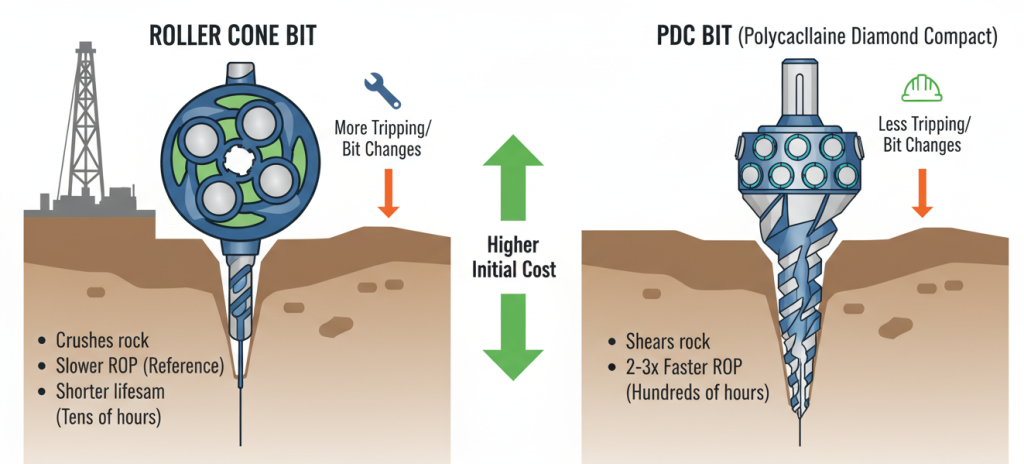

The problem of fast wear of traditional drill bits in deep hard rock formations is solved, and the single drill bit well pdc has strong footage ability, which effectively reduces the most time-consuming tripping process in deep well operations.
In view of the pain point of hard formation easy to collapse tooth, through the pre-stressed composite sheet process and cutting angle fine adjustment, to solve the drill bit in the soft and hard alternate formation of the instantaneous impact load caused by the tooth crushing.
The pain point that the drill bit is wrapped by rock debris when drilling in the clay layer is solved, the optimized chip removal groove has increased chip holding space, and the high-pressure jet is matched to ensure that the debris is instantly taken away.
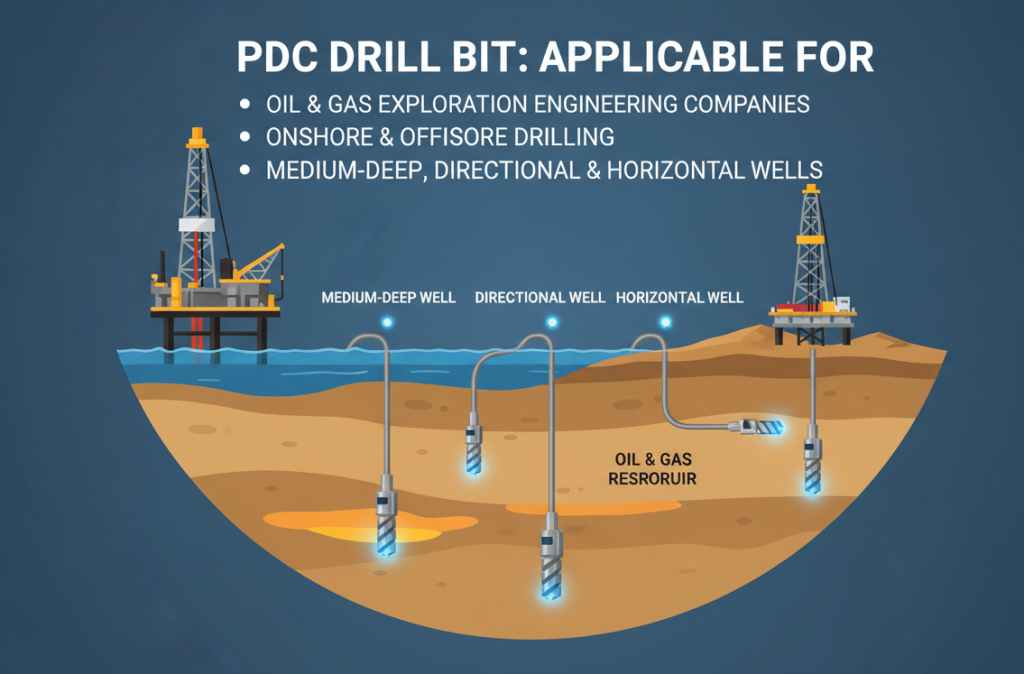
It is suitable for the exploitation of medium-deep wells, directional wells and horizontal wells on land and offshore, and meets the strict demand for high mechanical drilling speed and long-life drilling tools.
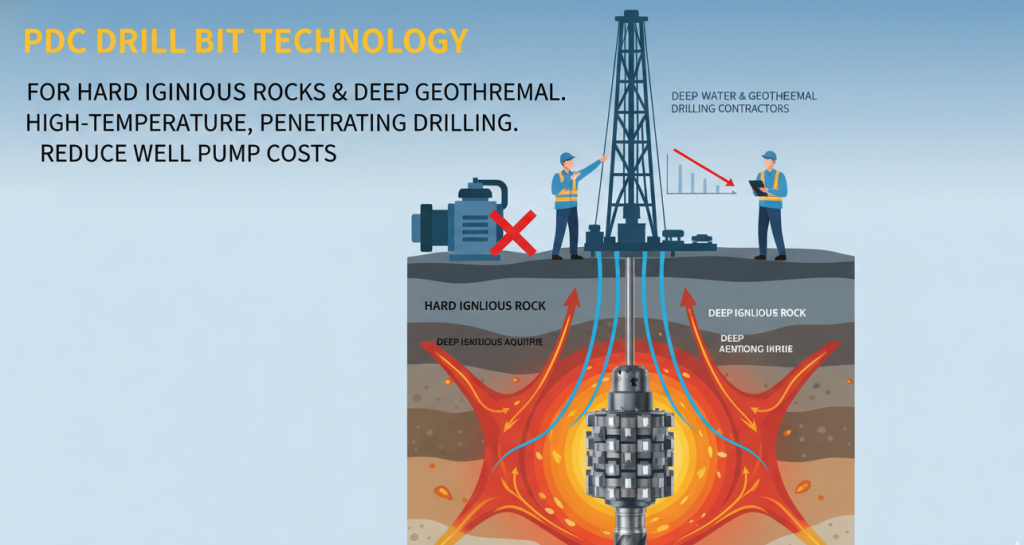
for geothermal development of hard igneous rocks or deep geothermal aquifers, to provide high-temperature and penetrating drilling programs to reduce the cost of large water pumps before the well.
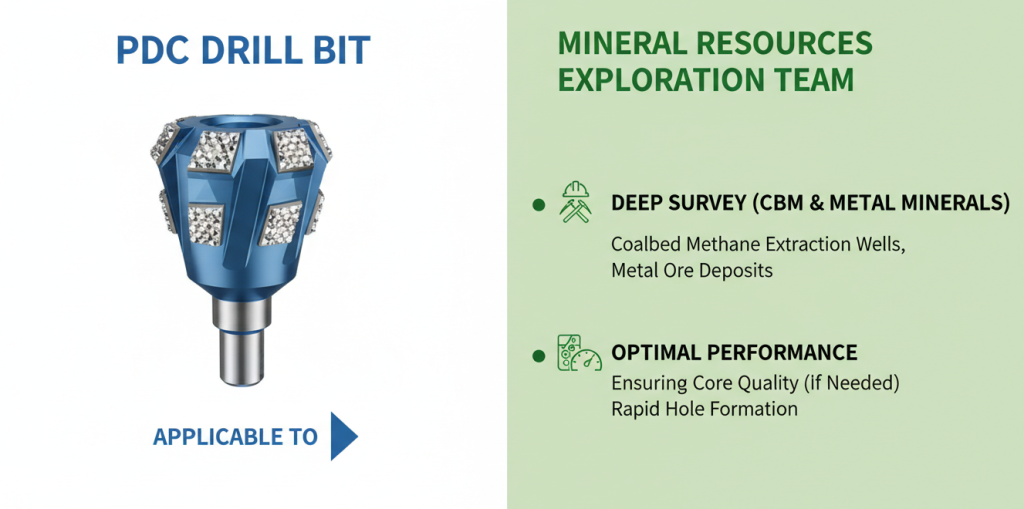
it is suitable for deep survey of coalbed methane (CBM) extraction wells and metal minerals, and has excellent performance in ensuring core quality (if necessary) or rapid hole formation.
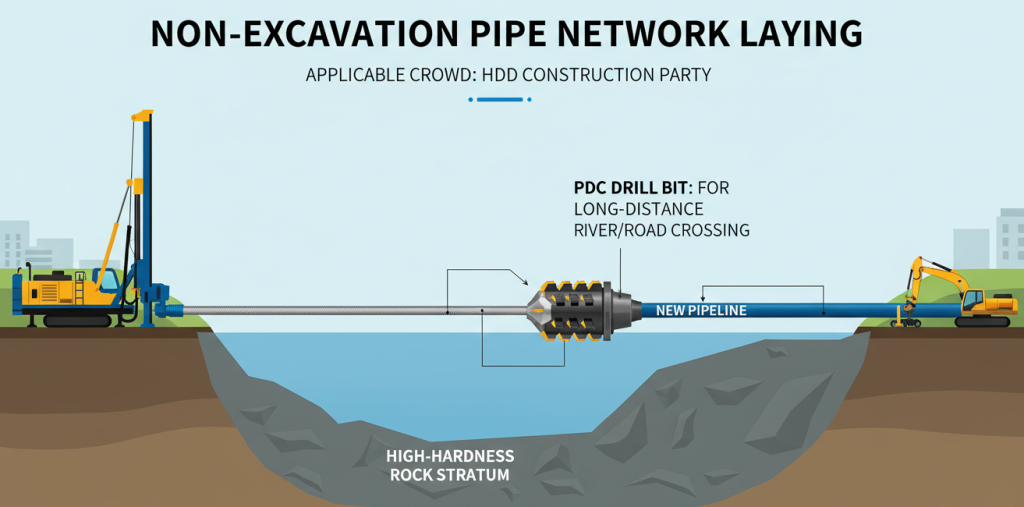
in the horizontal directional drilling (HDD) construction, it is used to pass through the high-hardness rock layer to ensure the timely completion of long-distance river crossing or road crossing works.
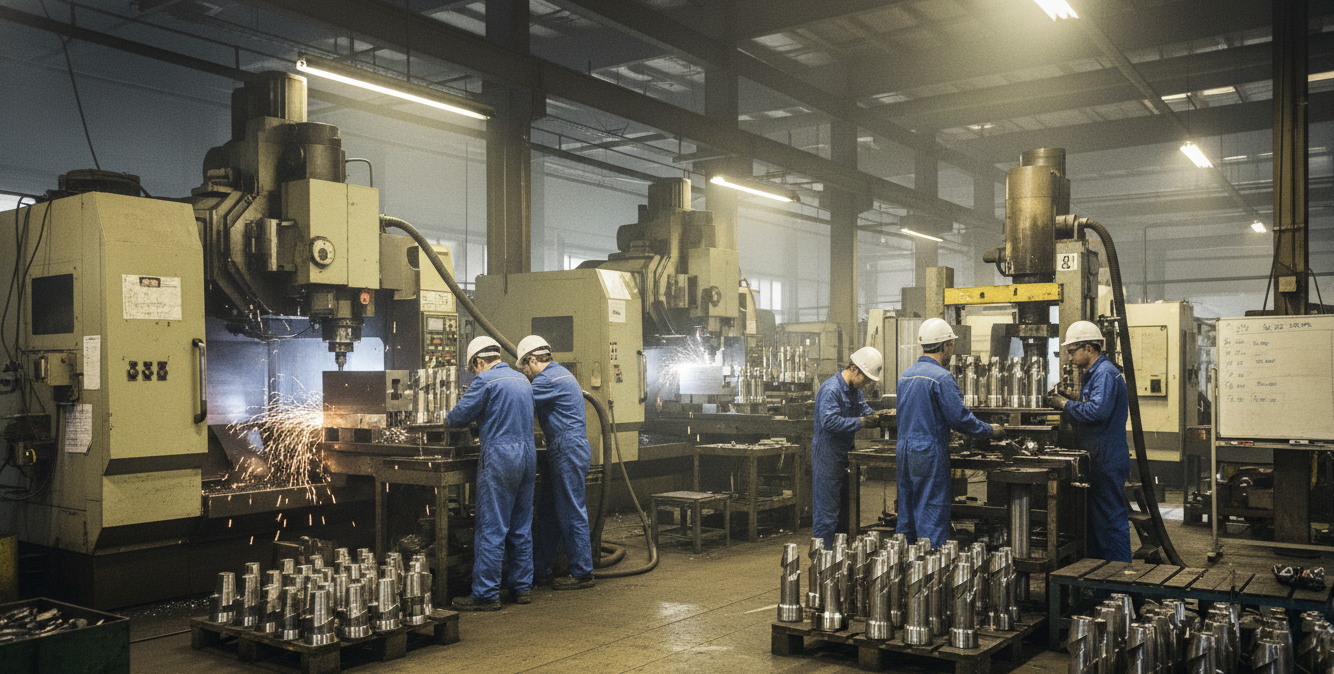
Our factory
A: It is designed primarily for use in moderately hard to hard formations (compressive strength not exceeding 25,000 PSI), such as limestone, sandstone and hard shale. For extremely hard igneous rocks, we recommend a model with smaller diameter cutting teeth.
A: The steel body bit has large chip removal groove, which is suitable for high ROP and soft formation; the matrix bit has stronger erosion resistance and is suitable for hard formation with high abrasion, large sand content or long time drilling.
A: When the penetration rate drops significantly (less than 50% of the normal value), the torque fluctuates abnormally or the mud pump pressure rises significantly under the same bit pressure, it usually indicates that the bit has been seriously worn or mud bag has occurred, and the drilling inspection should be considered.
A: Yes, the drill bit is equipped with a replaceable tungsten carbide screw-in nozzle. You can calculate the optimal water horsepower (HSI) and replace nozzles with different bore diameters based on the displacement and pressure requirements of the on-site mud pump.
A: Support. Our the drill bit well pdc adopts a short gauge and lateral force balance design, which is very suitable for directional drilling with screw drill (PDM) or rotary steerable system (RSS).
A: Depending on the damage. If the matrix is intact and only the individual composite sheet is worn, the PDC composite sheet can be replaced by a professional brazing process to achieve recycling and further reduce costs.
The drill bit well pdc uses high-quality polycrystalline diamond compact (PDC) and reinforced alloy matrix. By optimizing the arrangement of cutting teeth, the drill bit life can be prolonged by more than 40% while improving the rate of penetration (ROP). It is the core tool for deep well and complex hard rock drilling to reduce the comprehensive cost and support bulk procurement.
IADC Code:
M221/M321/S123
Cutting tooth size:
13mm/16mm/19mm
Applicable compressive strength:
≤ 25,000 PSI
high-quality polycrystalline diamond layer with a layer thickness of 2.0-2.5mm is adopted, which improves wear resistance by 30%, ensures that the drill bit well pdc cutting edge is still sharp under high temperature and high friction environment, and reduces frequent drilling.
computer fluid dynamics simulation is carried out for nozzle layout to remove the debris accumulation at the bottom of the drill bit, effectively prevent the phenomenon of “mud-packed drill bit” caused by viscous formation, and keep drilling efficiency stable.
the diameter-preserving part is embedded with high-density tungsten carbide column and natural diamond, and the tolerance is controlled within the range of +0.02 “/-0” to ensure that the well diameter is still regular after long-distance drilling and reduce the difficulty of casing running in the later period.
double-row tooth structure is adopted in high-risk cutting areas to share single-tooth load, impact toughness is increased by 50%, and cracking of the composite sheet is prevented when dealing with uneven hardness strata or gravel layers.
steel body (Steel Body) or carcass (Matrix Body) two options. The matrix bit adopts impregnated tungsten carbide, which has strong erosion resistance and is suitable for corrosive fluid and highly abrasive sandstone formation.
the asymmetric layout of 3-8 blades tested by dynamic balance significantly reduces the radial vibration during rotation, so that the drill bit well pdc has more accurate tool surface control ability in directional drilling.
| Parameters | Specifications/Description | Industry standards/implementation standards |
| Product Specifications and Dimensions | 3 1/2″ (88.9mm) – 17 1/2″ (444.5mm) | Compliant with API Spec 7-1 standard |
| Number of blades | 3, 4, 5, 6, 8 blades are optional. | Configuration based on formation hardness |
| Connector thread | 2 3/8″ – 7 5/8″ API Reg | API Standard Oil Thread |
| Nozzle quantity/type | 3-9 interchangeable screw-in nozzles | Tungsten carbide material, resistant to high-pressure erosion |
| Recommended WOB (Workover End) | 5,000 – 35,000 lbs | Depends on drill bit size |
| Recommended RPM | 60 – 180 RPM | Compatible with rotary or screw drills |
| Formation compressive strength | Soft to medium-hard strata (shale, sandstone, limestone) | IADC 100-400 series |
PDC bits shear rock, increasing ROP by 2-3x vs. cone bits, shortening drilling time. Despite higher initial cost, long lifespan (hundreds of hours) reduces tripping and bit change costs, cutting per-meter drilling cost by over 25%.
The problem of fast wear of traditional drill bits in deep hard rock formations is solved, and the single drill bit well pdc has strong footage ability, which effectively reduces the most time-consuming tripping process in deep well operations.
In view of the pain point of hard formation easy to collapse tooth, through the pre-stressed composite sheet process and cutting angle fine adjustment, to solve the drill bit in the soft and hard alternate formation of the instantaneous impact load caused by the tooth crushing.
The pain point that the drill bit is wrapped by rock debris when drilling in the clay layer is solved, the optimized chip removal groove has increased chip holding space, and the high-pressure jet is matched to ensure that the debris is instantly taken away.
It is suitable for the exploitation of medium-deep wells, directional wells and horizontal wells on land and offshore, and meets the strict demand for high mechanical drilling speed and long-life drilling tools.
for geothermal development of hard igneous rocks or deep geothermal aquifers, to provide high-temperature and penetrating drilling programs to reduce the cost of large water pumps before the well.
it is suitable for deep survey of coalbed methane (CBM) extraction wells and metal minerals, and has excellent performance in ensuring core quality (if necessary) or rapid hole formation.
in the horizontal directional drilling (HDD) construction, it is used to pass through the high-hardness rock layer to ensure the timely completion of long-distance river crossing or road crossing works.
A: It is designed primarily for use in moderately hard to hard formations (compressive strength not exceeding 25,000 PSI), such as limestone, sandstone and hard shale. For extremely hard igneous rocks, we recommend a model with smaller diameter cutting teeth.
A: The steel body bit has large chip removal groove, which is suitable for high ROP and soft formation; the matrix bit has stronger erosion resistance and is suitable for hard formation with high abrasion, large sand content or long time drilling.
A: When the penetration rate drops significantly (less than 50% of the normal value), the torque fluctuates abnormally or the mud pump pressure rises significantly under the same bit pressure, it usually indicates that the bit has been seriously worn or mud bag has occurred, and the drilling inspection should be considered.
A: Yes, the drill bit is equipped with a replaceable tungsten carbide screw-in nozzle. You can calculate the optimal water horsepower (HSI) and replace nozzles with different bore diameters based on the displacement and pressure requirements of the on-site mud pump.
A: Support. Our the drill bit well pdc adopts a short gauge and lateral force balance design, which is very suitable for directional drilling with screw drill (PDM) or rotary steerable system (RSS).
A: Depending on the damage. If the matrix is intact and only the individual composite sheet is worn, the PDC composite sheet can be replaced by a professional brazing process to achieve recycling and further reduce costs.