 kingpdc


поиск товаров
поиск

A polycrystalline diamond composite fuses a synthetic diamond table to a cemented tungsten carbide substrate under extreme High-Pressure High-Temperature conditions, delivering the exact shear strength required to fracture dense rock formations. Drilling engineers specify the diamond compact for its exceptional hardness, yet standard cutters routinely fail prematurely at temperatures exceeding 750°C. We analyzed failure data from 40+ deep-well Permian Basin runs to pinpoint why this happens. Thermal degradation, driven by trapped cobalt catalysts, destroys the diamond lattice long before abrasive wear takes its toll. By implementing deep-leaching protocols and 3D non-planar interface designs, drill bit manufacturers can instantly extend cutter lifespan by up to 300%.
Laboratory specifications rarely match downhole realities. A typical diamond pdc cutter looks indestructible on paper, boasting extreme wear resistance. Frictional heat generated against hard shale or limestone causes the internal cobalt catalyst to expand faster than the diamond itself. This thermal mismatch generates internal micro-fractures. The cutter edge chips, loses its aggressive rake angle, and forces the drilling rig to apply more weight on bit, accelerating the total destruction of the cutting structure.
Selecting the right cutter requires optimizing three competing properties. The W-I-T Pyramid provides a quantifiable selection model for drilling engineers.
Износостойкость
Thick diamond tables and fine-grain diamond powders maximize abrasive wear resistance. High-speed drilling in uniform, sandy formations demands cutters heavily weighted toward this base metric. The trade-off is higher brittleness.
Ударная вязкость
Coarse-grain diamond mixes absorb mechanical shocks better than fine grains. Interbedded formations containing chert or pyrite nodules require coarse-grain structures to survive sudden impact spikes without catastrophic fracturing.
Термическая стабильность
Operating temperatures dictate survival. High-speed motor drilling generates immense heat. Engineers must select Thermally Stable Polycrystalline cutters—where the cobalt is leached out—to maintain the apex of this pyramid.
Performance Comparison of PDC & TSP Cutters (Scale: 1 to 10)
| Cutter Type | Wear Resistance (W) | Impact Resistance (I) | Thermal Stability (T) |
| Fine Grain (PDC) | 9 | 5 | 5 |
| Coarse Grain (PDC) | 5 | 9 | 5 |
| TSP (Thermally Stable Polycrystalline) | 8 | 4 | 10 |
Relying solely on drop-weight impact test scores is a massive engineering mistake. Manufacturers often present high impact numbers based on blunt-force tests. These tests ignore the high-frequency lateral vibrations experienced in real horizontal drilling.
Residual stress concentrates directly at the planar interface between the diamond and the carbide substrate. When lateral vibration hits this stress line, micro-chipping begins.
Engineers avoid this trap by specifying non-planar interfaces. Radial, grooved, or ridged substrate designs increase the physical surface area connecting the two materials. The irregular geometry diffuses lateral stress waves. Cutters with NPI designs show a 90% reduction in delamination events in high-vibration applications compared to flat-interface alternatives.
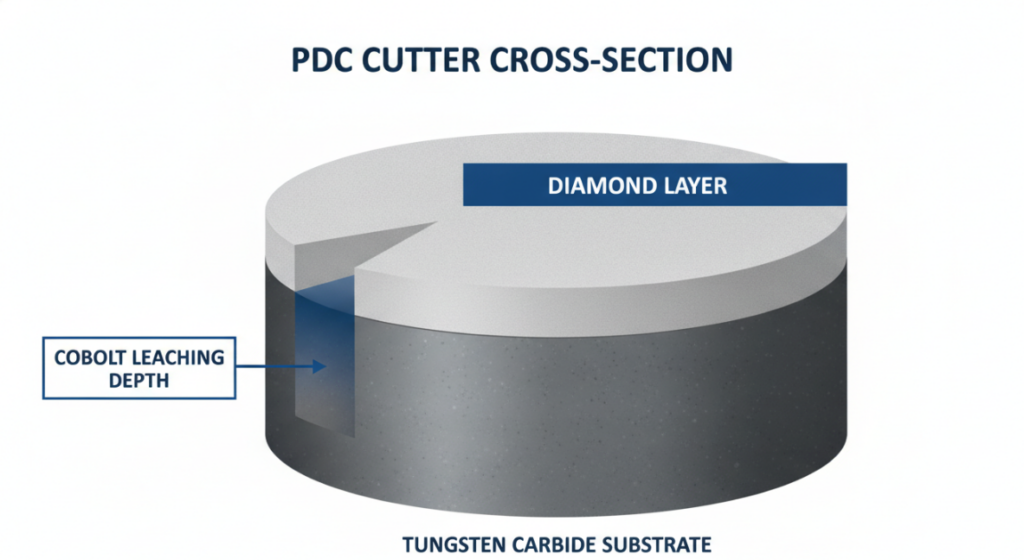
Cobalt acts as the essential binder during the HPHT manufacturing process, but it becomes a liability in the field. Removing this metal from the active cutting edge dictates the long-term viability of a pdc diamond cutter.
Acid leaching dissolves the cobalt network from the top 200 to 400 microns of the diamond table. The resulting porous diamond structure withstands temperatures up to 1,200°C without breaking down. Tool designers must match the leaching depth to the anticipated wear flat area. Over-leaching weakens the sheer impact resistance of the edge. Under-leaching leaves cobalt exposed to heat zones. Precision depth control during the leaching process separates premium manufacturers from budget suppliers.
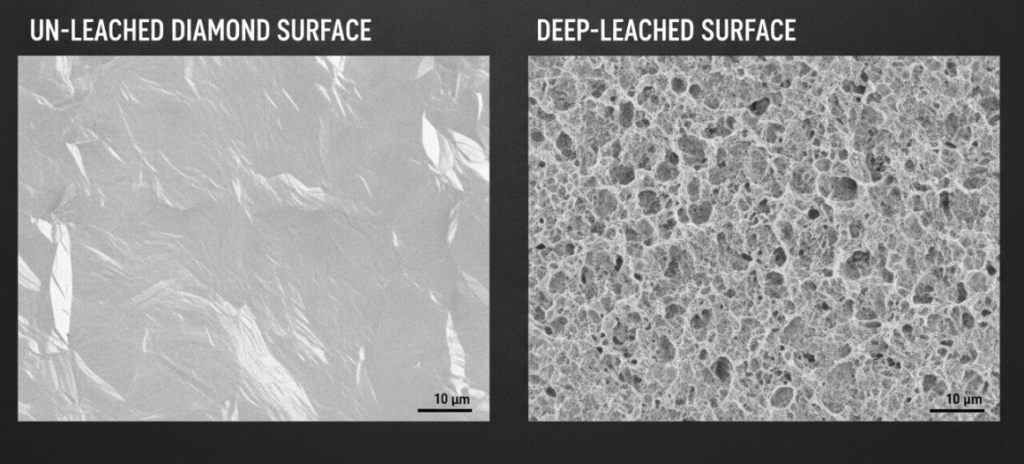
Empirical data reveals the exact financial impact of advanced cutter engineering. We tracked bit runs in the Delaware Basin targeting the Wolfcamp formation, notoriously known for interbedded hard streaks.
Run A utilized standard planar, un-leached cutters. The bit drilled 3,200 feet at an average Rate of Penetration of 45 ft/hr before being pulled due to severe cutter spalling and ring-outs.
Run B deployed cutters optimized via the W-I-T Pyramid, featuring 300-micron deep leaching and non-planar interfaces. The bit completed a 9,800-foot lateral section at 78 ft/hr.
| Bit Type | Footage Drilled (ft) | Average ROP (ft/hr) | Dull Grade (IADC) | Cost Per Foot Savings ($/ft) |
| Standard 6-Blade PDC (Offset) | 5,420 | 68.5 | 4-4-RO-S-X-I-CT-PR | Baseline |
| Optimized 6-Blade PDC (Test) | 7,850 | 94.2 | 1-2-WT-A-X-I-NO-TD | $ 4.75 / ft |
The data confirms that specifying the correct polycrystalline architecture directly reduces the Cost Per Foot by minimizing trips out of the hole.
What is the difference between PDC and TSP?
PDC contains cobalt, limiting its thermal threshold to around 700°C. TSP is a PDC cutter that has had the cobalt leached out, allowing it to withstand temperatures exceeding 1,000°C without degrading.
How thick is the diamond layer on a diamond compact?
The diamond table thickness typically ranges from 1.5mm to 3.0mm, depending on the specific application. Thicker tables provide longer wear life but require advanced stress-management interfaces to prevent delamination.
Why do drilling bits use tungsten carbide substrates?
Tungsten carbide absorbs the heavy mechanical impacts that would shatter pure diamond. It provides a tough, brazeable foundation, allowing the cutter to be securely attached to the steel or matrix body of the drill bit.
How does grain size affect diamond pdc performance?
Finer diamond grains increase abrasion resistance, ideal for highly abrasive but consistent rock. Coarser grains increase impact toughness, preventing chips when drilling through fractured or interbedded rock formations.
What causes spalling in pdc diamond cutters?
Spalling occurs due to a combination of thermal fatigue and mechanical impact. Heat expansion differentials between the diamond and residual cobalt create internal cracks, which spread and cause large chunks of the diamond layer to flake off during drilling.
Can polycrystalline diamond composite cutters be reused?
Used cutters with minimal wear flats can sometimes be rotated and re-brazed into newly manufactured bits, or repurposed for less demanding drilling operations like water well or construction drilling. Heavily spalled or heat-checked cutters must be scrapped.
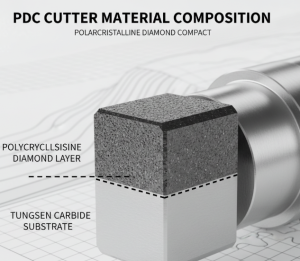
Что такое сверло PDC? Алмазный инструмент с фиксированной головкой, использующий сдвиг для эффективного сверления мягких и среднетвердых пород.
Посмотреть детали
Повысьте производительность бурения с помощью высокопроизводительных резцов PDC от Field Diamond. Усовершенствованное HPHT спекание и формообразование для снижения общих затрат на бурение.
Посмотреть детали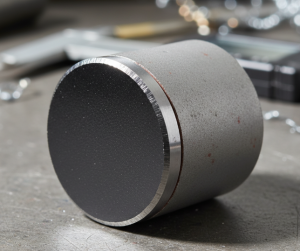
Узнайте, как выщелачивание резцов PDC удаляет кобальт, чтобы предотвратить термическое разрушение. Повышение износостойкости для увеличения срока службы долот и повышения производительности.
Посмотреть детали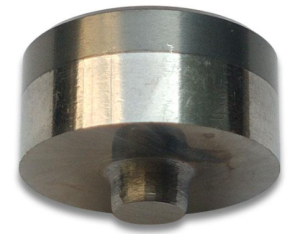
Дилер по продаже ступенчатых фрез PDC научит вас, как правильно выбрать сверло PDC, исходя из сценариев и условий работы.
Посмотреть детали