 kingpdc


recherche de produits
recherche
When evaluating PDC Bit Cost, many peers are most likely to fall into the trap of taking a unit price list that doesn’t even include all the technical parameters and treating it as the final cost of the entire solution. We need to understand that PDC (polycrystalline diamond composite chip) drill bits are not just the cutting teeth mentioned above. It is a complete system that includes not only teeth, but also drill body, blade wings, tooth sockets, nozzles, flow channels, chip removal grooves and diameter-retaining structures. So, buying a whole drill bit and buying a few PDC teeth individually are two completely different things.
If you compare two quotations both labeled “PDC bit”, the bases may be completely different. What is the diameter? What material is the drill bit made of? How are the blade wings arranged? How many teeth are there? Even down to the cutting tooth itself, its size, tooth shape, diamond layer thickness, how the chamfer is made, what level of performance it is… these details change slightly, and the cost varies greatly. If you just look at the final total price, you have no idea whether these two suppliers quoted prices at the same starting line.
Not to mention, the quotation will also be influenced by business conditions such as the quantity purchased, packaging and transportation, and the currency of taxes and fees. The accounts for proofing and mass production are also calculated separately. There are usually only a few samples to be made, and the startup cost, tooling mold cost and engineering confirmation cost are shared, so the unit price is naturally shockingly high; once mass production starts, the cost of a single piece will definitely go down, but there are also limits, and it is impossible to be cheap without a bottom line.
PDC cutting teeth are the main work force on drill bits. In addition to the most common flat teeth (usually used in primary cutting or bore retention), manufacturers like Fidder can also provide ridge teeth, double chamfers, 3D and 4D teeth, and even special-shaped structures such as edge cutting, cone, ball and ballistic. Different shapes have vastly different manufacturing difficulties, installation and positioning requirements, and later measurement and protection standards. Don’t compare prices by looking at similar-looking teeth and putting irregular teeth together with standard flat teeth.
In addition, diamond and cemented carbide are indeed used more in larger sizes, but the price does not increase proportionally with the diameter. Larger products occupy more synthetic cavity space, and the thickness of the diamond layer and strict tolerance requirements will directly affect the final yield. Some small-sized non-standard teeth may be more expensive per unit than large teeth because they are used in small quantities, require special tooling or extremely strict testing.
Going deeper, the purity and particle size ratio of diamond powder, as well as the cobalt content and grain structure in the cemented carbide matrix, all secretly provide cost prices. PDC teeth are synthesized by high-temperature and high-voltage equipment. The machine depreciation, molds, consumables, electricity costs, post-processing and scrapping rates are all factored into the manufacturing cost.
When inquiring about pricing, special requirements such as decobaltization, special interface treatment, polishing, coating, or laser marking must be clearly listed one by one. If the supplier only throws one away “a general price per bite”, the best question to ask when purchasing is: are these additional requirements included, do you need to add extra money, or can’t you do it at all?
If you want to compare prices, you must first unify the standards. The drawing version, application scenario, and blade structure of the drill bit must be finalized first; the model, outer diameter, height, chamfer, base interface, and performance indicators of the cutting teeth must also be aligned. If it is a custom job, remember to ask the supplier to calculate the proofing fee, mold development fee “one-time expenses” and the future stable mass production unit price.
The terms of business must also be put on the same plate. No matter how low the ex-factory price is, if the shipping costs are outrageous, the exchange rate risk is high, and the delivery nodes stipulated by Incoterms (trading terms) are unfavorable to you, the final CIF cost will still exceed the standard. When looking for different pdc bit manufacturers or pdc bit suppliers, the best thing to do is to have them list “technical deviation table” and “unincluded project costs” honestly, and don’t just listen to them pat their chests and say “they can do it”.
A reliable inquiry form must be submitted first: Is this time for budgeting, proofing, a small trial or formal mass production? How much are you planning to buy? What is the expected annual usage? The technology section, including the image number version, key dimensions, tooth shape requirements, surface treatment, formation conditions, and the wear or impact resistance targets you hope to achieve, must all be clearly stated.
The same applies to business. The delivery location, whether it can be delivered in batches, packaging requirements, currency used, and whether taxes are included are clearly listed one by one. If some conditions are not yet finalized, you can ask for a budget price first, but remember to write down the hypothetical conditions at that time to avoid changing the configuration later and mistakenly thinking that the supplier is simply raising the price.
Anyone who knows the ropes knows that PDC bit cost should never be stuck at that number on the procurement contract. What really needs to be calculated is the overall performance after installing the drilling rig: what is the yield rate upon delivery? How much is the effective ruler advance? The mechanical drilling speed was not raised? Have you ever stopped drilling due to frequent drill bit repairs?
You can use a very practical algorithm: “add the cost of the drill bit itself to the time cost of the drilling rig, and finally divide it by the actual ruler advance”, which is the real unit ruler advance cost. Of course, when verifying the performance of a certain cutting tooth, try to keep other conditions (such as the formation, drilling rig parameters, and overall design) unchanged, and do not count the performance of the entire drill bit on a single tooth. Only when the working conditions and records are on a benchmark line can the price difference have real engineering guidance significance.
Ultimately, the real cost reduction depends on unifying mature specifications, merging similar orders, stabilizing procurement pace, optimizing logistics, or relaxing those harsh tolerances that are meaningless. However, cutting off necessary quality control links in order to lower prices is definitely not worth the loss.
For each quote, the technical version, quantity, currency, and expiration date behind it should be archived. Once the sample is obtained and the batch data is released, its quality and performance can be verified. The PDC bit cost calculated in this way is the real good data that can help you with budgeting, selecting suppliers and project review, rather than a string of empty numbers that are divorced from actual conditions.
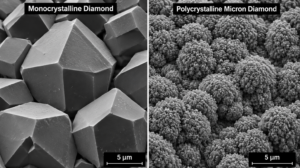
Découvrez nos solutions à base de diamant synthétique polycristallin micronique pour un polissage impeccable des plaquettes et des rendements CMP élevés.
Voir les détails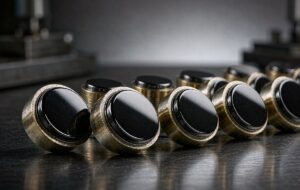
Polycrystalline diamond, commonly referred to as PCD in the industry, is an ultra‑hard material formed by sintering a large number of fine diamond grains under high temperature and high pressure. It retains diamond’s near‑ultimate hardness and wea...
Voir les détails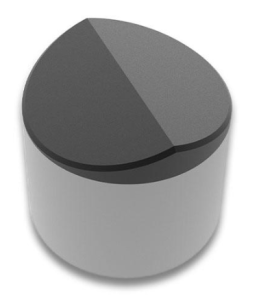
Kingpdc présente un type de foret Pdc - des fraises commerciales Pdc en forme d'arête qui peuvent être utilisées comme outils pour l'exploitation pétrolière.
Voir les détails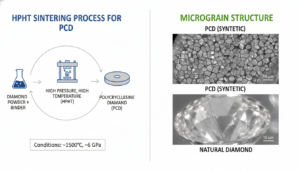
Découvrez ce qu’est le diamant polycristallin, ses principales applications industrielles et les conseils d’experts pour vous approvisionner et réduire vos coûts d’usinage.
Voir les détails