 kingpdc


búsqueda de productos
busque en
PDC bits (polycrystalline diamond compact bits) are essentially fixed-crown drilling tools that, using their synthetic diamond cutting teeth, cut into rock formations by continuous scraping. In the past, conventional roller-cone drill bits relied on brute force to “crush” rock, but PDC bits are different: they directly “cut” through shale, limestone, and sandstone. Precisely because of this highly efficient rock‑breaking method, it is now employed in over 90% of oil, natural gas, and geothermal drilling operations. That said, if you pick the wrong drill bit model and it doesn’t match your wellbore, it’s a disaster—drilling tools are scrapped, the mud system becomes severely plugged, and substantial rig costs are wasted. Today, let’s take a look at the mechanical structure of this thing. By the way, we 1 pick up the purchasing traps of drilling projects that are easy to pit. Finally, we will give you a set of clear selection guidelines to facilitate the next practical operation.
PDC bits are not just pieced together, it is a precision system of blades, diamond cutting teeth and hydraulic runners. Every component on this must be exactly the same as the temperament (geological conditions) of the formation you are going to hit.
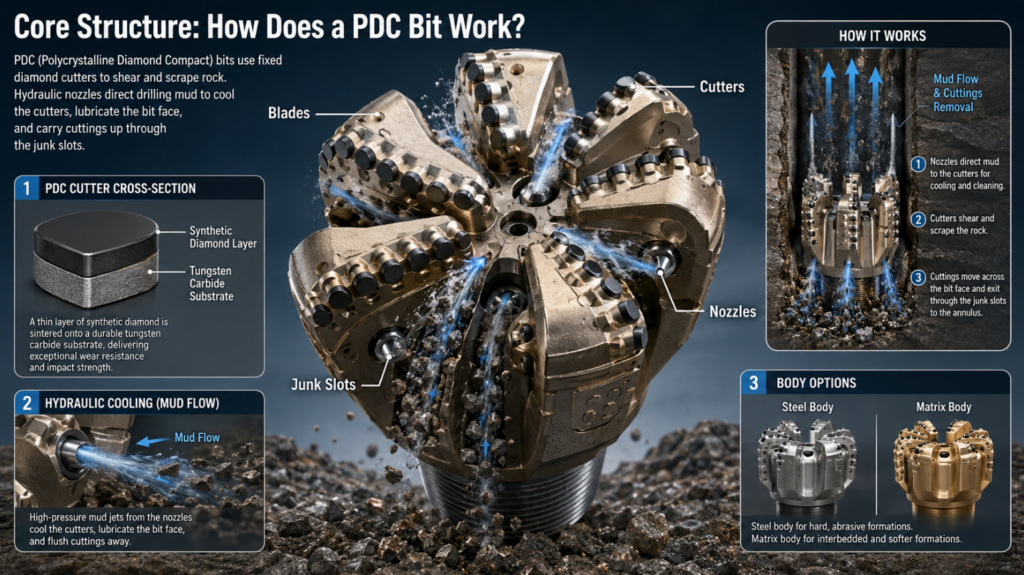
These cutting teeth are manufactured by sintering a synthetic diamond layer onto a tungsten carbide substrate under extremely high temperature and pressure conditions. The diamond layer is exceptionally wear-resistant, ensuring that the “teeth” remain sharp; the underlying tungsten carbide acts as a buffer, specifically absorbing impact forces from the drill string. As long as sufficient weight on bit (WOB) and rotational torque are applied, these cutting teeth can literally scrape away the rock layer by layer.
The drill bit’s main structural design directly determines its hydraulic efficiency and impact resistance. When manufacturers produce PDC drill bits, they typically use either forged steel or a cemented carbide matrix. Steel-body drill bits exhibit excellent structural toughness, allowing the cutting flutes to be machined deeper and the chip‑evacuation grooves—spaces designed to remove cuttings—to be enlarged. As for matrix‑body drill bits, they are manufactured by impregnating tungsten carbide powder with a metallic binder, resulting in an exceptionally hard surface that is particularly well suited to resisting fluid erosion in highly abrasive sandstone formations.
Nozzles with precisely calculated angles can direct the drilling fluid (mud) directly onto the cutting teeth. These drilling muds not only forcefully flush away the cuttings but also provide effective cooling for the synthetic diamonds. Don’t underestimate this step—without such powerful cooling, friction could easily heat the cutting teeth to over 700°C in no time. At that moment, as the cobalt binder in the diamond lattice expands, there’s a “crack,” and the cutting teeth shatter into fragments on the spot.
PDC technology, simply put, serves two purposes: first, to maximize the rate of penetration (ROP); second, to minimize the number of trips—meaning keeping the drill string in the well and avoiding frequent pulling out for re‑rigging.
The PDC drill bit excels at cutting rocks based on their uniaxial compressive strength (UCS). In the past, roller-cone drill bits had to be pressed down firmly, relying on localized crushing to forcibly break into the rock. In contrast, PDC bits are much more labor‑efficient and require significantly lower bit weight‑on‑bit; after all, from a physics perspective, “cutting” rock is far easier than “crushing” it. This cutting action produces continuous ribbon‑shaped cuttings when encountering plastic rocks such as shale, while in brittle rocks like limestone it fragments the material into small chips.
Because it can maintain close contact with the rock face at all times, the PDC bit achieves an exceptionally high mechanical penetration rate. Unlike roller-cone bits, it has no moving parts such as bearings, so there is no need to worry about complex mechanical failures downhole. As long as you choose the right model, a single PDC bit can drill several thousand feet without needing to be replaced.
Many procurement managers fall into a serious misconception, believing that “the harder, the better,” and thus blindly purchase steel‑body drill bits. If you encounter reactive clays or shale formations, this basic mistake will inevitably ruin the entire drilling operation.
Because the tire carcass material is relatively brittle, manufacturers must thicken the cutting edges to prevent them from fracturing. When the cutting edge is thicker, the space left for the chip flute becomes smaller. Once it drills into that sticky shale, the narrow chip flutes are instantly clogged solid with clay. At this point, the drilling mud is completely unable to flush away the cuttings, and the entire drill bit becomes caked into a large, useless mud ball. In the industry, this is called “mud packing”; once it occurs, the drilling rate drops to zero. So take this advice: when drilling into sticky formations, you must use steel-bodied drill bits, because steel has excellent toughness, allowing the cutting blades to be made very thin and the chip flutes to be wide enough, making chip evacuation exceptionally smooth.
When looking at the PDC drill bit parameter table given by the manufacturer, don’t make any guesses, just apply the C.U.T. rule directly.
| Geological Formation | Rock Characteristics | Recommended Blade Count | Recommended Cutter Size | Recommended Bit Body Type | Selection Reason |
|---|---|---|---|---|---|
| Soft Shale / Clay | Low strength, high plasticity, easy to cut | 4–5 Blades | 19 mm Large Cutters | Steel Body | Fewer blades increase aggressiveness and allow deeper rock engagement per cutter |
| Medium Soft Formation | Moderate hardness, balanced drilling response | 5–6 Blades | 16 mm Cutters | Steel Body / Matrix Body | Balanced cutting efficiency and impact resistance |
| Piedra caliza | Medium to hard, abrasive, requires impact distribution | 6–7 Blades | 13 mm Cutters | Matrix Body | More blades distribute impact loads and reduce cutter damage |
| Arenisca | Hard, highly abrasive formation | 7–8 Blades | 13 mm or 9 mm Cutters | Matrix Body | Better wear resistance and improved cutter protection in abrasive environments |
| Interbedded Soft–Hard Formation | Rapid changes in hardness, impact loading risk | 6–8 Blades | 13–16 mm Impact-Resistant Cutters | Matrix Body with Reinforced Cutter Support | Shock absorption design helps prevent cutter breakage under variable loads |
| Highly Abrasive Hard Rock | Extreme wear conditions | 8 Blades | 9–13 mm Cutters | Premium Matrix Body | Maximizes wear resistance and maintains cutting structure integrity |
| Sticky Reactive Shale | High mud displacement requirement, bit balling risk | 5–6 Blades | 16–19 mm Cutters | Steel Body | Improved hydraulic cleaning and reduced formation sticking |
| Mixed Formation Above 25,000 PSI UCS | Very high compressive strength, severe impact | 7–8 Blades | 9–13 mm Reinforced Cutters | Shock-Resistant Matrix Body | Designed for extreme impact loads and cutter protection |
| Recuento de cuchillas | Tamaño del cortador | Body Type | Best Application |
|---|---|---|---|
| 4 Blades | 19 mm | Steel Body | Very soft shale, clay formations, maximum aggressiveness |
| 5 Blades | 16–19 mm | Steel Body | Soft formations requiring high penetration rate |
| 6 Blades | 13–16 mm | Steel / Matrix Hybrid | General-purpose drilling, mixed formations |
| 7 Blades | 13 mm | Matrix Body | Hard limestone and sandstone drilling |
| 8 Blades | 9–13 mm | Premium Matrix Body | Extreme abrasion and high-impact hard rock |
In the past, those traditional flat cylindrical cutters would struggle immensely to split even the hardest interbedded strata. Currently, the most popular trend in deep‑well drilling is 3D‑shaped diamond cutters—such as those with ridges, conical profiles, or even full‑on axe‑shaped diamond segments.
These unconventional teeth concentrate the applied drilling pressure into an extremely small point, allowing them to effortlessly pierce through those troublesome limestone interlayers like a sharp awl. According to data from the Permian Basin field, when drilling through transitional formations, drill bits equipped with chisel-shaped cutters can achieve a penetration rate up to 35% higher than conventional flat‑tooth bits, thereby saving the rig crew substantial rig‑time.
What materials are PDC drill bits made of?
Its body is typically made of machined steel or a tungsten carbide matrix. The cutting elements welded onto the body are called polycrystalline diamond compact (PDC) inserts, which are produced by sintering a layer of synthetic diamond onto a tungsten carbide substrate.
How does a PDC drill bit actually work?
In essence, it involves dragging the fixed diamond‑cutting teeth along the wellbore’s rock surface, scraping back and forth. This rotational scraping action cuts the rock into thin slices or small fragments, which are then flushed back to the surface by high-pressure drilling fluid.
What is the difference between roller cone drill bits and PDC drill bits?
A roller-cone drill bit is equipped with several rotating metal cones studded with teeth, which primarily crush rock by applying downward compressive force. In contrast, PDC bits have no moving parts and rely entirely on their fixed polycrystalline diamond‑layered cutters to penetrate the rock. In most formations, PDC bits drill much faster and have a longer service life.
When should a PDC bit be used?
When drilling homogeneous sedimentary formations such as shale, sandstone, and limestone, PDC bits are the sure‑fire choice. However, when encountering formations with abundant fractures, high chert content, or extremely hard igneous rocks, it becomes less effective; in such cases, it is still necessary to switch to a roller-cone bit or a specialized impregnated‑diamond bit.
How do PDC drill bits typically fail?
The three most common modes of failure are thermal degradation, impact damage, and wear. If the drilling fluid flow rate is insufficient, the diamond cutting teeth will crack when they overheat (exceeding 700°C). Moreover, if the drill suddenly encounters a layer of extremely hard rock, the cutting teeth may shatter outright or even come loose at their roots.
How many cutting wings does a PDC drill bit typically have?
Products on the market typically have between four and eight cutting blades. Cutters with fewer blades (4 to 5) have a deeper penetration and are primarily designed for aggressive, high‑rate drilling in soft formations. By contrast, cutters with more blades (6 to 8) are suited to hard rock; the increased number of blades helps distribute the cutting forces and prevents diamond spalling.
What exactly is a “mud ball”?
A mud pack is essentially the drill bit becoming clogged with mud. When drilling through viscous formations—such as reactive clays or shales—the cuttings tend to become tightly lodged in the gaps between the cutting blades (the chip flutes). With such a blockage, the drilling fluid simply cannot flush the drill bit clean; not only can cutting operations not continue, but the rig crew must also stop and pull the bit back to the surface for cleaning.
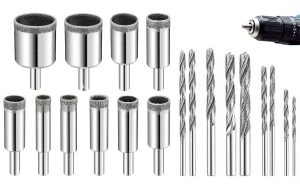
Proporcionar broca de punta de diamante incluyendo broca sólida y broca de núcleo, especialmente diseñada para roca, vidrio, etc.
Ver detalles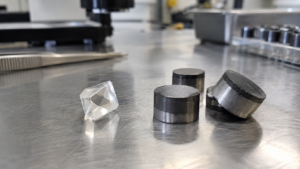
Single Crystal Diamond Vs Polycrystalline Diamond Explained With Hardness And Cutting Use Differences.
Ver detalles
Conozca las diferentes formas de los cortadores de PDC en las brocas con punta de diamante y cómo influyen en la eficacia y resistencia de la perforación.
Ver detalles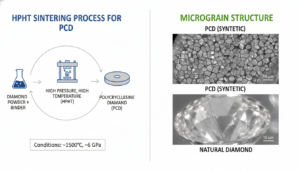
Discover What Polycrystalline Diamond Is, Its Top Industrial Uses, And Expert Sourcing Tips To Lower Machining Costs.
Ver detalles