 kingpdc



product search
search

Article Contents
• what is a diamond tip drill bit
• Types of diamond tip drill bit
• Diamond Solid bits and Diamond core drill bits: What is the difference
• Which diamond tip drill bit should I use
• Sintered diamond drill bits and electroplated diamond drill bits
Diamond tip drill bit are specialized tools commonly used for working with hard, brittle materials, stone, and for precision machining. Unlike regular drill bits, their diamond-coated tips allow them to cut through the hardest materials—since diamond is the hardest substance in nature, with a Mohs hardness of 10.
I’ve compiled some information on diamond tipped drill bits, including their characteristics, classifications, uses, sizes, and factors that influence their price.
diamond tip drill bit are tools for working with hard and brittle materials. Unlike conventional drill bits designed to cut softer materials, these drill bits utilize an industrial diamond coating to abrade the surfaces of extremely tough materials like porcelain, stone, and concrete. Diamond’s unparalleled hardness is key to the drill’s breaking power, enabling it to easily penetrate materials that would dull and wear out traditional drill bits. It also ensures high precision, preventing the target surface from being irregularly broken.
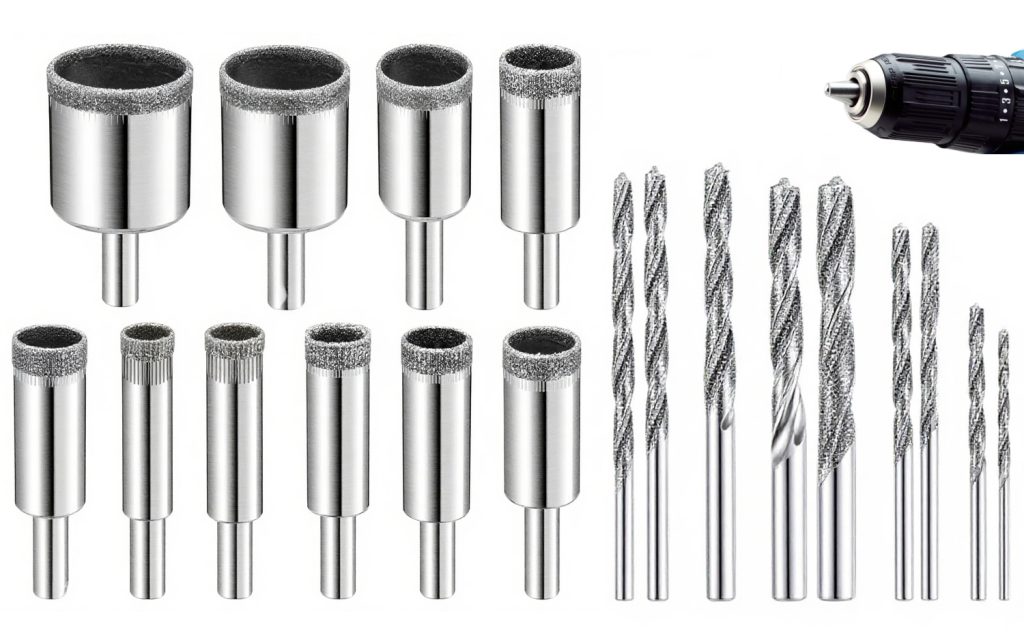
A typical diamond drill bit consists of two main parts: the body and the diamond tip.
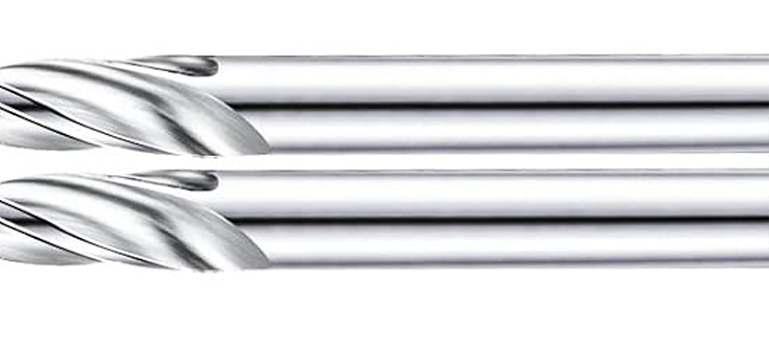
Usually made of high-strength steel, it provides the stability and strength needed for drilling. Its shape and length determine how deep you can drill. The bottom of the body, called the shank, houses the drill tip.
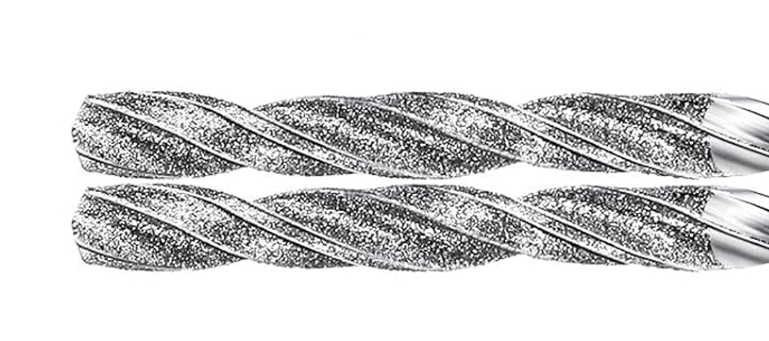
This is the core of the bit. It’s covered in tiny industrial diamond particles. Instead of cutting, these diamonds grind away the material, turning it into a fine powder. The way these diamonds are attached to the tip determines the bit’s quality and lifespan. there are two types of attachment: electroplated and sintered.
The tip shape also varies. There are solid tips diamond tip drill bit for small, precise holes and hollow tips diamond core drill bits for large holes.
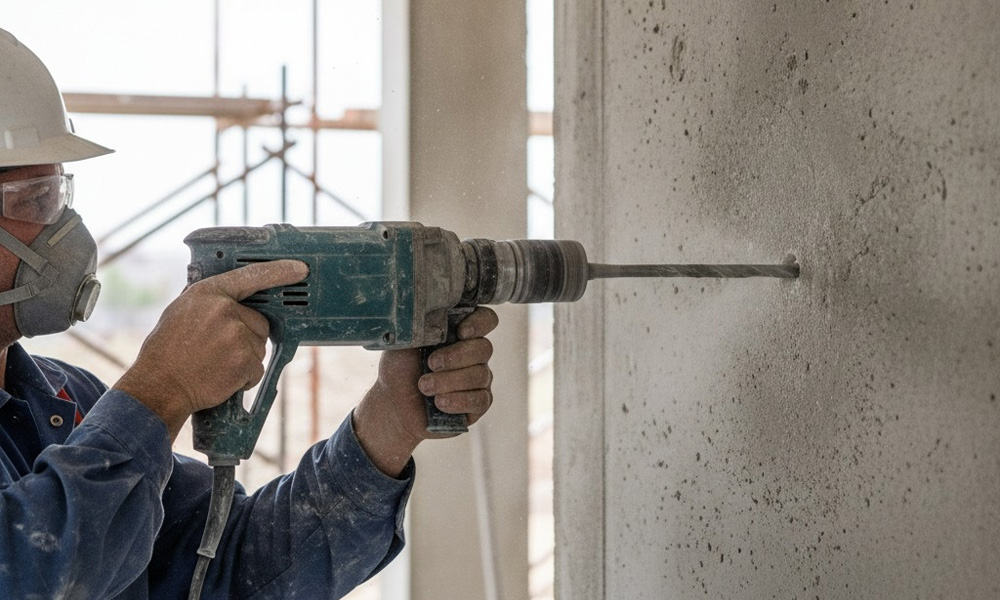
You’ve undoubtedly seen or used it in the following industries:
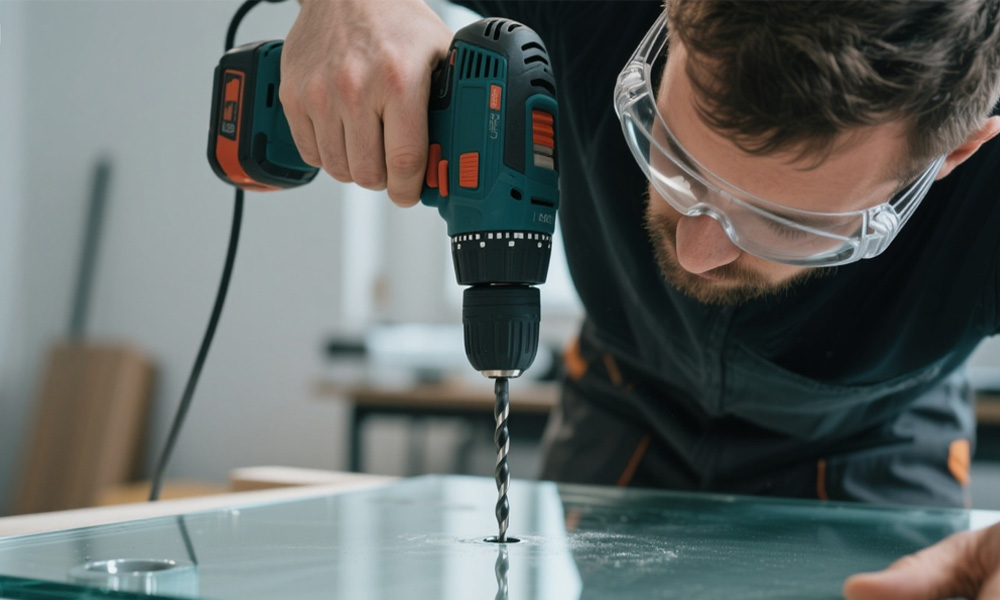
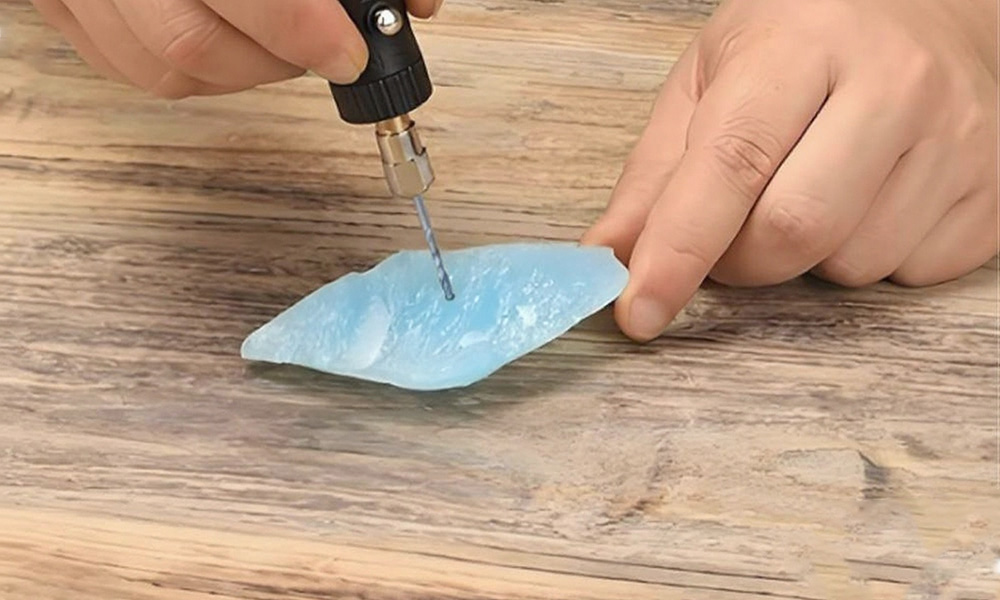
Diamond core drill bits are distinguished by their hollow, cylindrical shape. They’re engineered to drill large-diameter holes by grinding only the outer edge, leaving a solid core of material in the center. This design makes them incredibly fast and efficient since they remove less material and generate less heat. They’re commonly used for jobs like installing plumbing and electrical conduits or cutting holes for sink faucets.
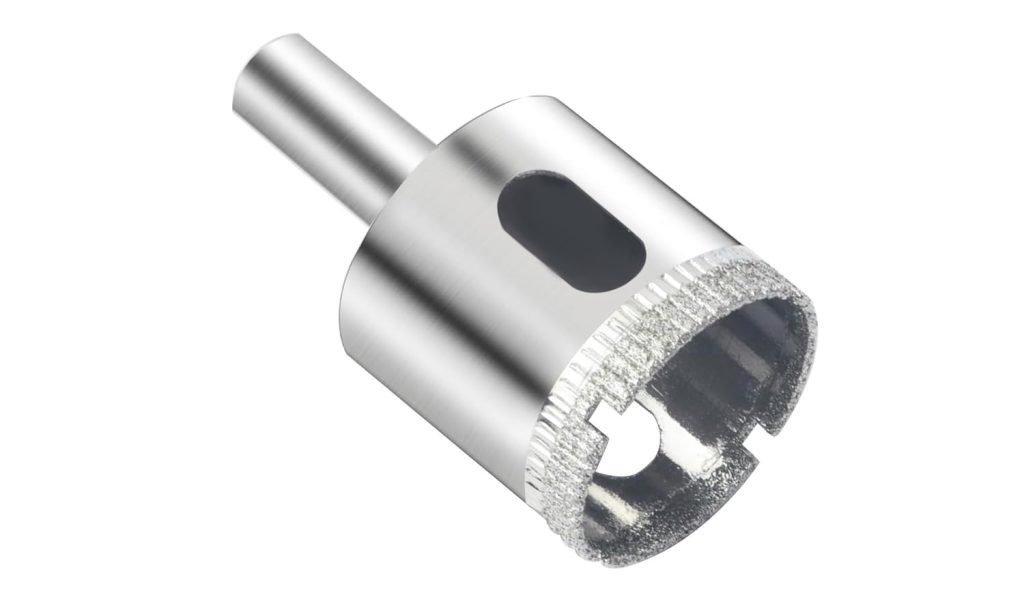
Diamond Core Drill Bits
Diamond solid bits are different. They have a solid, pointed tip and are designed for drilling smaller, more precise holes. Instead of cutting just the edge, they grind away all the material within the hole’s diameter. This makes them the perfect tool for intricate work, such as drilling holes in glass bottles for art projects or for jewelry making.
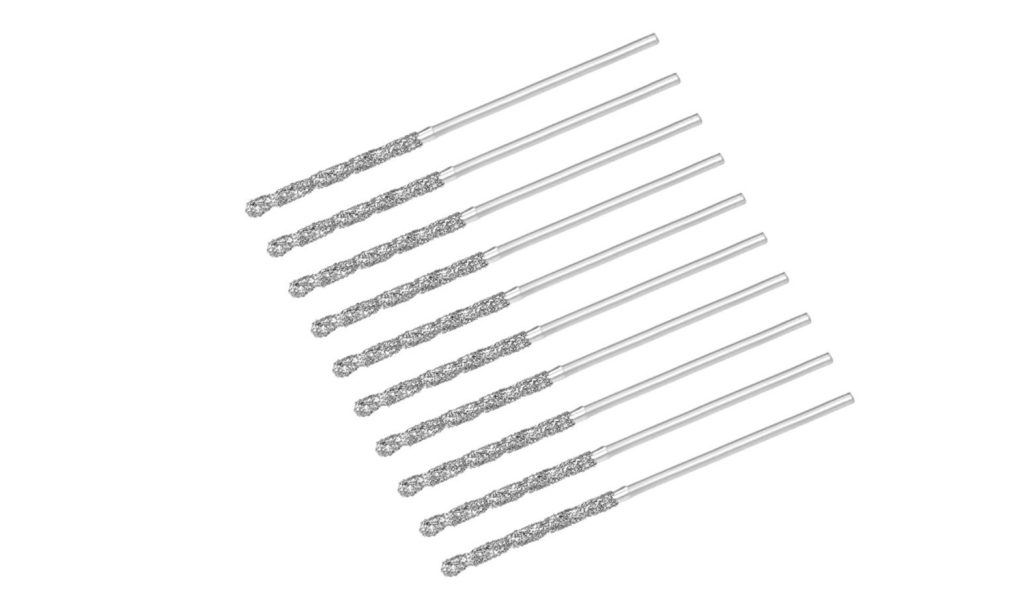
Diamond Solid Drill Bits
Both are diamond-tipped bits, but their functions and shapes are different.
Diamond Core Drill Bits: These are hollow and cylindrical. They’re designed for drilling large, clean holes by grinding only the outer edge of the cutting area. They’re best for jobs like installing plumbing or drilling into concrete.
Diamond Solid Bits: These have a solid tip. They grind away all the material to create a small, precise hole. They’re the right tool for intricate work on glass or for jewelry making.
Recommended drill bit: Diamond Core Drill Bits.
These drill bits are hollow and grind only the edges of the hole, making them extremely efficient, removing the least amount of material in the shortest possible time. They are particularly suitable for preparing holes for pipes, wires, or large fixtures in construction and renovation projects.
Recommended drill bit: Diamond Solid Drill Bits.
These drill bits have a solid tip, allowing for a finer grind. They provide greater precision and are ideal for crafts, jewelry, or drilling holes in delicate ceramics.
Recommended drill bit: Diamond Spherical Burrs or other shaped engraving burrs.
These tools have spherical or other specialized tips designed for precise grinding, carving, and shaping, rather than simple drilling. They are ideal for crafts, gemstone carving, and other tasks.
Recommended drill bit: Diamond core drill bits, sized to match the installation hardware.
Drilling large holes in these materials requires smooth, clean cuts to prevent tile cracking or marble chipping. Core drill bits cut with an abrasive motion, producing cleaner holes than other drill bits.
Recommended drill bit: Sintered diamond drill bits.
The diamond grains in sintered drill bits are multi-layered, making them more durable than electroplated drill bits. As the outer layer wears away, a new layer of diamond is exposed, ensuring a longer lifespan and more consistent cutting performance.
In general, Diamond bits are designed for hard, brittle materials. They are not for use on soft materials like wood, plastic, or metal(Yes, diamond drill bits cannot drill metals such as hardened steel.), which would clog the bit. If you have these needs, I suggest you choose a traditional drill bit.
These are the two main ways of setting diamond-tipped drill bits, which determine the performance and life of the drill bits.
Features: This is a more advanced process. Multiple layers of diamond particles are mixed with metal powder and then sintered together under high temperature and pressure to form a hard composite tip.
Advantages: Extremely durable and very long-lasting. Even if the outermost diamond layer wears away, a new layer of diamond particles remains exposed to continue working. This makes it an excellent choice for high-intensity, frequent use.
Features: This is the most common setting method. It uses an electroplating process to attach a layer of diamond particles to the metal tip of the drill bit.
Advantages: Low cost and affordable. Ideal for DIY projects with infrequent use.
Disadvantages: Limited lifespan. Once the surface layer of diamond particles wears away, the drill bit loses its cutting ability and needs to be replaced.
Disadvantages: High cost and more expensive.
If you are an occasional user, a plated drill bit will suffice. But if you are a professional who needs to frequently handle hard materials, then investing in a durable sintered drill bit will be more cost-effective in the long run.
Diamond drill bits are typically sized in millimeters (mm) or inches (inches). They can be roughly divided into three categories based on their diameter, allowing you to choose the right size.
Small-Sized Drill Bits (< 5mm)
These drill bits have a very small diameter (even 1mm diamond bits) and are suitable for delicate work requiring extreme precision.
Applications:
Jewelry making and gemstone drilling.
Drilling small holes in glass or ceramic artwork.
Precision model making and electronic equipment repair.
Medium-Sized Drill Bits (6mm – 25mm)
Common examples include 6mm diamond drill bits, 8mm diamond drill bits, 10mm diamond drill bits, 1/8 diamond bits, 1/4 diamond bits, 3/4 diamond bits, 3/8 diamond bits, and 3/16 diamond bits.
This is the most common size range and has a wide range of uses, covering nearly all home renovation and DIY projects.
Applications:
Drilling holes in tiles for installing bathroom fixtures (such as towel racks and shower heads).
Drill holes in countertops for faucets or soap dispensers.
Drill holes in walls for outlets or switch boxes.
Large-size drill bits (> 25mm)
Common drill bits include: 32mm diamond core drill bits, 100mm diamond bits, 1″ diamond bits, 1 1/8 diamond drill bits, 1 1/4 diamond bits, 1 1/2 diamond drill bits, and even the largest 8 inches.
These large-diameter drill bits are primarily used for heavy-duty and specialized construction projects and are typically diamond hollow drill bits.
Uses:
Installing pipes, vents, or air conditioning lines.
Opening large holes in concrete or brick walls for large pipes or wires.
Used for machining tasks requiring large apertures in industrial manufacturing.
You might be concerned about the cost of diamond drill bits, as I am. So I’ve compiled some factors that influence cost.
Electroplated: This process is the least expensive, as it uses only one layer of diamond particles, making it the cheapest. (However, it can be very cost-effective for less intensive use.)
Sintered: This process is more complex, requiring multiple layers of diamond particles. It is extremely durable, so the price is usually several times higher than electroplated drill bits.
Shape: Special shapes, such as those used for engraving or chamfering (e.g., diamond-shaped drill bits), are more complex to manufacture and therefore more expensive.
Proper maintenance can significantly extend the life of diamond drill bits and ensure efficient drilling every time. Here are a few key you should know:
Always ensure a steady stream of water while drilling, either dripping from a water bottle or using a sponge.

The technological innovations of PDC cutters (Polycrystalline Diamond Compact Cutters) are a significant driving force behind the advancement of oil and gas drilling technologies. Below is a detailed introduction to the technological innovations ...
View details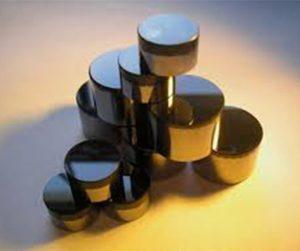
In the realm of oil and gas exploration and extraction, technological advancements have continually driven the industry towards greater efficiency, safety, and sustainability. Among these innovations, PDC cutters (Polycrystalline Diamond Compact...
View details
In the field of oil and gas exploration and development, PDC cutters (Polycrystalline Diamond Compact Cutters) undoubtedly stand out as one of the most revolutionary technological breakthroughs in recent decades. PDC cutters, made of polycrystal...
View details