 kingpdc


product search
search

In drilling, PDC stands for polycrystalline diamond compact. It refers to a super-hard synthetic diamond tool used on drill bits for efficient, fast, and lasting rock cutting in oil, gas, geothermal, and mining operations. It combines the hardness of diamond and the toughness of tungsten carbide.
The term “polycrystalline diamond compact” sounds like a lot of words, but it accurately describes the engineering logic of this material. It is this complex structure that allows the drill to gnaw through the hardest rock formations on Earth.
The core of PDC technology lies in its two-layer structure:
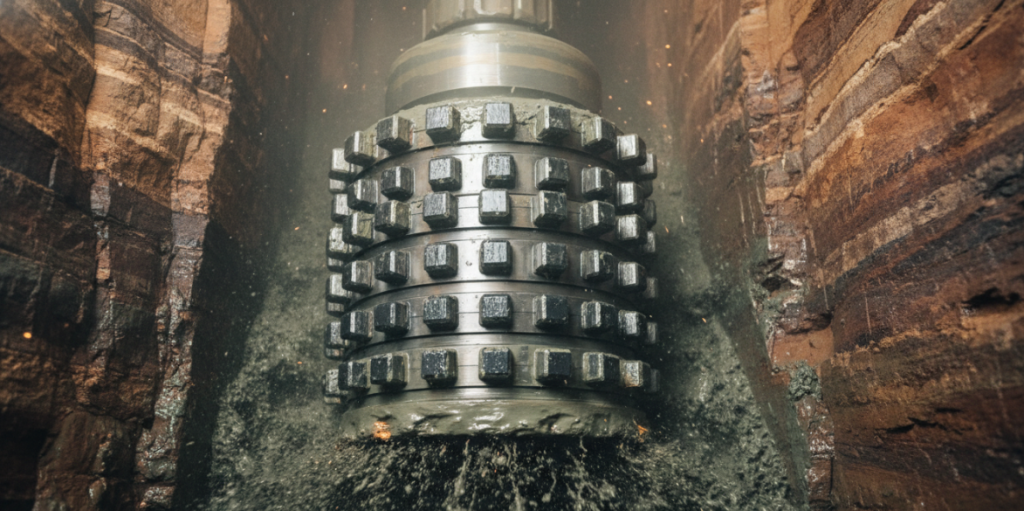
The emergence of the PDC bit completely turned the industry upside down, mainly because it changed the way rock was broken thousands of meters underground.
Traditional roller cone bits mainly rely on crushing and smashing stones, and the efficiency is relatively low. The PDC bit uses a shear action.
Flat PDC Cutter
Flat PDC Cutter features a flat structure for uniform force distribution, exceptional wear resistance for long service life, and a versatile, cost-effective design.
Dome PDC Cutter
Dome PDC cutter uses spherical geometry for superior impact resistance, ensures uniform heat dissipation to prevent thermal damage, and adapts to varied formations.
Ridge shaped
Ridge shaped PDC cutter features ridge-like projections to boost drilling efficiency, optimized chip removal channels, and an anti-rotary vibration design for stability.
Step PDC Cutter
Step PDC cutter features a step structure for staged rock breaking, reduced contact area to minimize frictional heat, and enhanced stability for reliable performance.
The position distribution of these cutting teeth on the drill is extremely exquisite. They are embedded in the blades of the drill, and there are channels called “flutes” between the blades. These slots play a decisive role in the drilling process:
The large-scale adoption of PDC technology in the industry is ultimately to reduce costs and improve performance in harsh environments.
The primary reason PDC has become the industry standard is the rate of penetration. Due to the shear mechanism, the PDC can drill more than half a bit faster than the old drill bit in the right formation, which directly shortens the so-called “wellhead time.”
Synthetic diamond is one of the hardest materials known to man. This gives PDC cutting teeth terrifying wear resistance and can maintain sharpness longer than steel teeth or ordinary tungsten carbide teeth. This durability means that “tripping” (the process of pulling up a few kilometers of drill pipe to change the drill bit) can be reduced. One less drill can save drilling contractors hundreds of thousands or even millions of shifts.
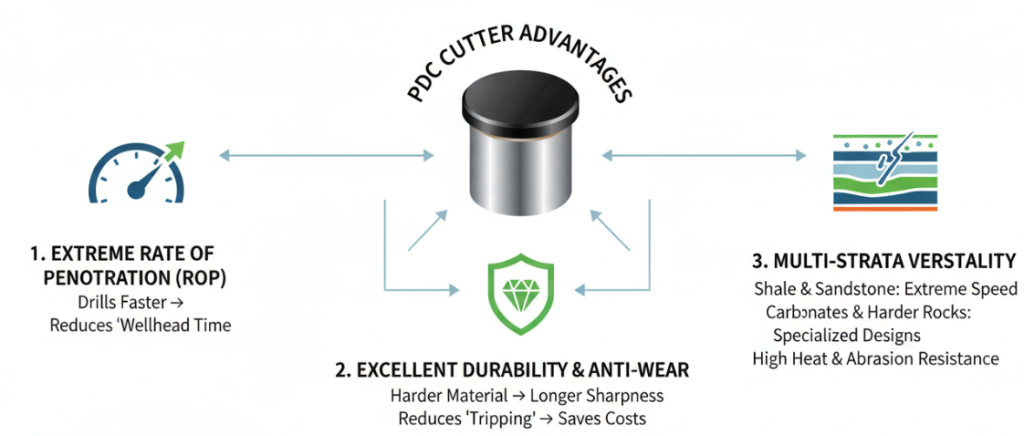
Early PDC bits could only hit soft formations, but current technology has already broken through the bottleneck.
By reducing downtime and optimizing rock-breaking energy, PDC technology is still the backbone of modern energy and resource extraction. Choosing the right PDC bit often determines whether a well can be drilled successfully.
Author: Robert Miller
I’m a drilling engineering specialist with over a decade of experience in downhole tool optimization. My work focuses on the technical evolution of PDC bits, and I’m passionate about helping industry professionals understand how synthetic diamond technology can maximize drilling efficiency and reduce operational costs.
This will close in 0 seconds