 kingpdc


product search
search

PDC (Polycrystalline Diamond Compact) refers to a specialized type of fixed-cutter drill bit that utilizes synthetic diamond cutters—created by sintering micron-sized diamond particles with a tungsten carbide substrate at high pressure and temperature—to drill through rock formations. PDC bits function by “shearing” the rock away (similar to how a carpenter’s plane shaves wood), a mechanism that makes them exceptionally durable and capable of achieving a much higher Rate of Penetration (ROP) in sedimentary formations.
The cutting elements on a PDC bit are known as polycrystalline diamond compacts. These are manufactured by sintering micron-sized synthetic diamond particles with a tungsten carbide substrate under conditions of high temperature and pressure (HPHT).This process fuses the diamond crystals into a strong, interconnected layer.
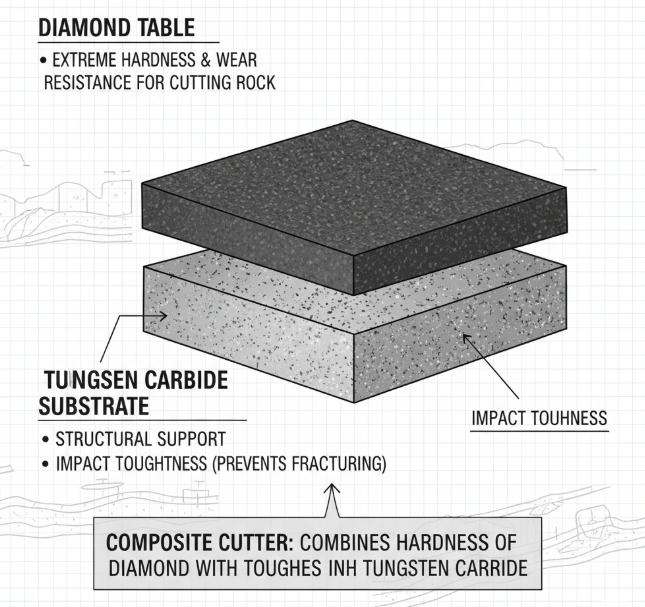
This diamond layer is then bonded to a tungsten carbide substrate.The final product, the “composite” cutter, combines the advantageous properties of both materials:
The Diamond Table: Provides extreme hardness and wear resistance, essential for cutting through rock formations.
The Tungsten Carbide Substrate: Offers the necessary structural support and impact toughness. This is crucial because diamond, despite its hardness, is brittle. The tough substrate acts as a “backing,” preventing the diamond layer from fracturing under the complex loads experienced downhole.
The fundamental difference between PDC bits and older roller cone bits lies in their method of breaking rock.PDC bits utilize a shearing action.The fixed cutters are set at a specific angle on the bit body. As the bit rotates, these cutters scrape or shear layers of rock away, similar to how a woodworking plane peels shavings from wood. This shearing action is more energy-efficient than the crushing and chipping mechanism of roller cone bits.
Flat PDC Cutter
Flat PDC Cutter features a flat structure for uniform force distribution, exceptional wear resistance for long service life, and a versatile, cost-effective design.
Dome PDC Cutter
Dome PDC cutter uses spherical geometry for superior impact resistance, ensures uniform heat dissipation to prevent thermal damage, and adapts to varied formations.
Ridge shaped
Ridge shaped PDC cutter features ridge-like projections to boost drilling efficiency, optimized chip removal channels, and an anti-rotary vibration design for stability.
Step PDC Cutter
Step PDC cutter features a step structure for staged rock breaking, reduced contact area to minimize frictional heat, and enhanced stability for reliable performance.
The shift from a “crushing” to a “shearing” rock-breaking method, combined with the durability of the polycrystalline diamond compacts, results in two significant performance advantages in drilling operations:
The synthetic diamond cutters are exceptionally hard and resistant to wear. This allows them to maintain a sharp cutting edge for longer periods compared to the steel teeth or tungsten carbide inserts on roller cone bits. A longer bit life means fewer “trips”—the time-consuming process of pulling the entire drill string out of the well to replace the bit. Reducing the number of trips saves significant time and reduces operational risks, offering a major benefit to the overall project duration and cost control.
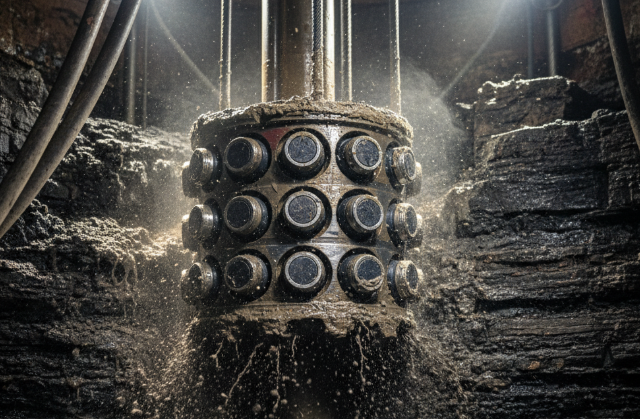
Because shearing is a more efficient way to remove rock, PDC bits can drill faster. A higher ROP translates directly to less time required to drill a well, leading to substantial cost savings.
About the Author:Bryan
Hello, I’m a dedicated drilling technology specialist with a focus on drill bit mechanics and downhole performance. With years of experience analyzing rock-cutter interactions, I specialize in breaking down complex engineering concepts—like the material science behind Polycrystalline Diamond Compact (PDC)—into clear, practical knowledge.