 kingpdc


product search
search

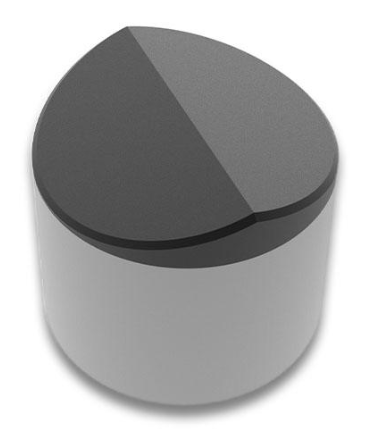
Different from the traditional plane or inclined plane pdc cutters, the cutting surface of the ridge type PDC cutting machine presents a protruding structure similar to a ridge or ridge line. It is made of high wear-resistant PDC layer and cemented carbide substrate through high temperature and high pressure sintering. This “ridge”-like structure can be arranged in a single strip, double strips or even multiple strips, depending on the design we optimize for a specific application.
Ridge type PDC cutting machine is mainly used in geological drilling, oil and gas exploitation, mine roadway excavation and other complex formation environment. Especially in the face of uneven hardness, high abrasiveness, or the formation containing cracks and interlayers, its advantages are particularly obvious. For example, when drilling hard sandstone and shale interlaced formations, the traditional cutter may have the problem of excessive local wear, while the ridge design can maintain better wear resistance, and the usable time is greatly extended compared to the traditional bit pdc.
First, from a mechanical point of view, the ridge structure changes the distribution of cutting forces on the PDC surface. It concentrates the cutting stress on the tip of the “ridge”, thus forming a smaller contact area and higher local pressure, which makes it more effective in breaking the rock to concentrate the stress and improve the efficiency of breaking the rock. The geometric problem is how to balance the height, width, spacing and cutting direction of the “ridge” angle, so that it can ensure the sharpness at the same time, avoid premature chipping. And in different terrain, different use cases need to choose different specifications and models (as shown below) of the drill.
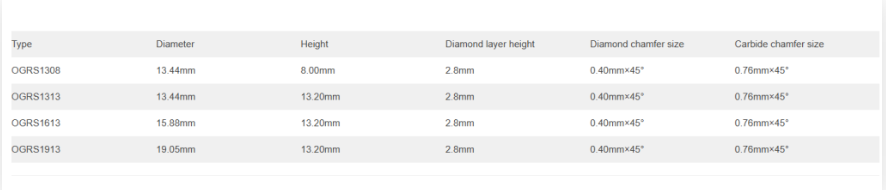
Secondly, the selection and combination of materials is also the key.
Diamond element is the hardest substance in nature, and PDC is the micron-sized diamond particles sintered together under extreme conditions of ultra-high temperature and ultra-high pressure to form a dense, diamond and bond interpenetrating network structure. In this process, the binder is also a crucial factor, which can promote the growth and interconnection of grains to form a strong structure. However, the content of the binder also needs to be precisely controlled, too much binder may reduce the hardness and thermal stability of the PDC layer, while too little binder may lead to insufficient sintering and reduce toughness. Therefore, we need precise control to find a golden ratio that makes the PDC layer both extremely hard to cut the hardest rock and tough enough to resist impact and avoid chipping.
Higher cutting efficiency
Studies have shown that , ridge type PDC cutter has higher cutting efficiency, can effectively reduce vibration, improve the drilling speed. The traditional flat drill bits pdc, when cutting, the contact area is relatively large, which causes the cutting force to be distributed in a larger area, and the stress per unit area is relatively low. The ridge cutter is not the case. Its “ridges” are sharp and prominent. When in contact with the rock, the cutting force is highly concentrated at the tip of these tiny “ridges”. The effect of this stress concentration makes it possible to reduce the overall The weight on bit, or under the same weight on bit, produces a higher local pressure, which can penetrate and break the rock more quickly and effectively.
In addition, the ridge design also helps to optimize chip evacuation. Cutting down the debris in the tool surface need to have a path to discharge. Flat tools may be more likely to form a “mud cake” effect, hindering chip removal. When the ridge structure is cutting, the groove part can form a certain space, which helps the coolant to better wash the chips and prevent the cutting surface from being blocked, thereby maintaining an efficient cutting state.
Longer service life
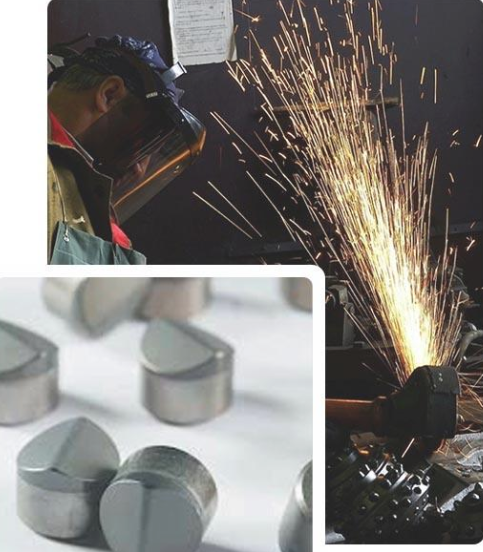
Traditional drill bits pdc may experience local excessive wear under certain working conditions, such as edge chipping or center “meat falling”. The ridge design, due to its multi-angular geometric characteristics, in the cutting process, when a “ridge” tip gradually blunt, the next “ridge” or the new geometric surface after wear can continue to maintain effective cutting ability. This is like a polyhedron, there are always sharp edges and corners can continue to work, rather than a flat dull after complete failure. This self-healing or self-maintaining sharpness feature greatly extends the effective working time of a single cutter.
Second, excellent impact resistance is also an important factor in prolonging life. In the complex underground environment, drill bits often encounter uneven hard and soft interlayers, cracks and even unexpected obstacles, which will produce severe impact loads. The ridge type PDC cutter is designed with this in mind. Its three-dimensional structure can better disperse and absorb the impact energy than the plane structure, and reduce the risk of micro-cracks and chipping caused by the impact of the PDC layer.
Excellent terrain adaptability
A formation is not homogeneous and may have hard quartzite interlaced with relatively soft shale, or contain fissures and highly abrasive interlayers. In such complex formations, conventional cutters often have difficulty maintaining stability and efficiency. When the drill bit enters the hard formation from the soft formation, the cutting load will increase suddenly, and the plane cutter may be damaged due to stress concentration; on the contrary, from hard to soft, there may be problems such as bit beating and instability.
The ridge design can better cope with the challenges of this changeable terrain. Its unique geometry allows it to maintain a stable cutting state when switching between different hardness formations. In the hard formation, it can effectively break rock; in the soft formation, and can smooth drilling, reduce the “stick slip” phenomenon and bit vibration. This stability greatly reduces the risk of vibration and deflection during drilling, and improves the quality and safety of the borehole.
In addition, the ridge-type structure also shows superiority in the face of highly abrasive formations. Due to the characteristics of cutting force dispersion and uniform wear, it can resist the continuous erosion and wear of high abrasive minerals on the tool surface and maintain its cutting performance. At the same time, its structure also helps to form new cutting points on the surface of cracks or irregular rocks, avoiding the problem that traditional cutters are easy to get stuck or the efficiency drops when encountering cracks.
Each 1 ridge PDC cutting machine undergoes a series of rigorous performance tests before leaving the factory, including:
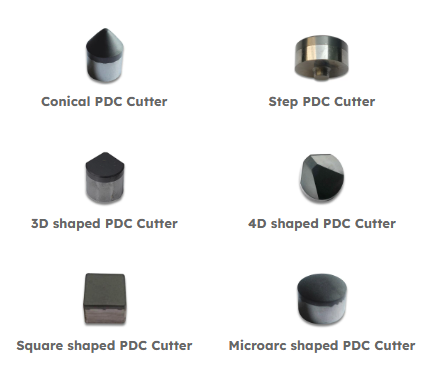
There is no uniform standard for choosing the right ridge type PDC cutting machine, and you need to consider your specific application scenario.
Formation type: Is the main formation hard, medium hard or soft? Is there a large amount of abrasive rock? The specific situation of the formation is different, and cutting machines with different ridge height, ridge width and arrangement are required. For example, drilling hard, highly abrasive granite or quartz sandstone layers requires a ridge-type cutting machine with relatively low ridge height, greater ridge density and thicker PDC layer thickness; drilling soft mudstone or clay layers with a small amount of hard nodules may tend to choose a ridge-type cutting machine with relatively high ridge height and large ridge spacing.
Drilling method: rotary drilling or impact rotary drilling? Different drilling methods have different requirements on the impact resistance and wear resistance of the cutting machine. High-speed rotary drilling will require the thermal stability and wear resistance of the PDC layer; impact rotary drilling requires stronger matrix toughness and the highest bonding strength between the PDC layer and the matrix.
When you choose, you can communicate with our technical team in detail, and we will provide professional advice according to your specific needs.
How to maintain to extend life?
Is all terrain applicable?
Although the ridge-type PDC cutter performs well in many complex formations, it is not a panacea. In some extremely soft or very loose formations, its unique rock-breaking mechanism may not give full play to its advantages. For example, in very soft mudstone, the traditional flat PDC cutter may be more effective. Therefore, please choose the appropriate type according to your needs, and consult professionals if necessary.