 kingpdc


product search
search

In my opinion, the most effective PDC picks in water well drilling are usually those of the “medium impact series” – these picks often adopt a medium to coarse-grained diamond grain structure. Its core advantage lies in its ability to strike a good balance between moderate wear resistance and excellent impact toughness. Specifically, for standard water well drill bits ranging from 6 inches to 12 inches, 1308 and 1613 sizes, along with special chamfering designs, have basically become the industry standard. Our goal is very simple: to find a type of cutting tooth that can remain intact (without chipping) under the impact of complex and changeable strata, while also keeping the drilling cost per meter within a reasonable range. After all, in the highly competitive water well drilling market, maintaining a profit margin is no easy task.
Well drilling is characterized by shallow layers, complex geology and a large number of interlaced soft and hard strata. So, in my opinion, impact resistance comes first. When our factory selects PDC picks for water well applications, we tend to prefer products with sintered coarse diamond grains.
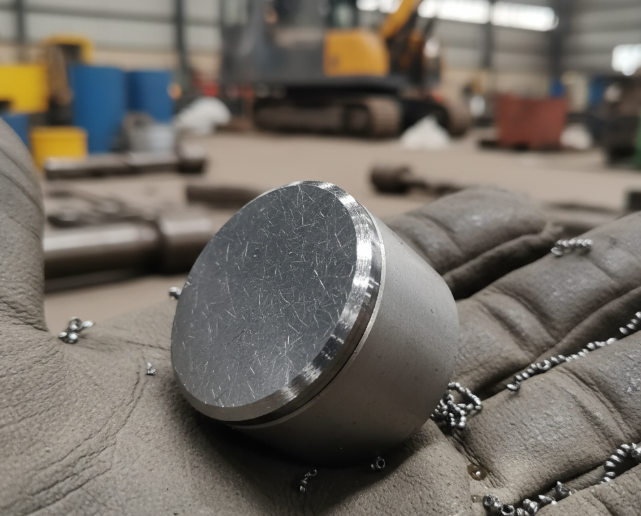
When people are choosing PDC picks for water Wells, they often only focus on the grade. However, in my personal opinion, the chamfer (that inclined edge) is the key.
Over the years, I have seen many traders re-label PDC picks of “stone cutting” grade and sell them as drilling grade products. To verify your supplier, my suggestion is to directly ask them to provide VTL (vertical lathe) test data and drop weight test data. A truly competent factory technical director will surely be able to show you how many times their cutting teeth have been cut on the granite rock block before a worn surface appears.
Understanding the performance limits of your PDC picks for water Wells can often save you the trouble of lifting and lowering the drill.
In this kind of stratum, the main failure mode is wear.
Recommended picks: Standard planar 1308 PDC picks.
Operation suggestion: You can run at a high speed. Here, the picks mainly break rocks through the “shearing” effect. If the cutting teeth are found to be blunt too quickly, it is necessary to check whether the hydraulic flushing (water flow) is sufficient and can effectively cool the cutting teeth. The “snake skin” -like hot cracks that appear on the diamond table of the cutting teeth are usually a signal of insufficient cooling rather than poor quality of the cutting teeth.
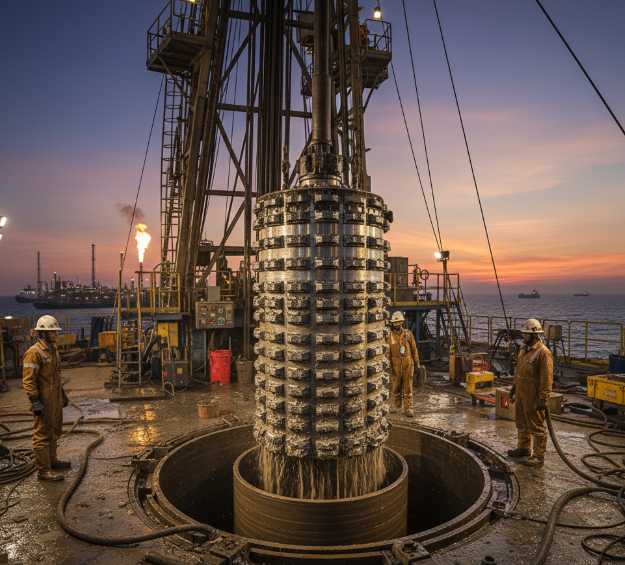
Under this type of stratum, the main failure mode is impact damage, such as chipping or fragmentation.
Recommended picks: Spherical or conical PDC inserts (sometimes as an auxiliary), or high-quality planar PDC with enhanced chamfers.
Operation suggestion: Appropriately reduce the rotational speed and increase the drilling pressure (WOB). If you notice delamination of the diamond layer (peeling off from the hard alloy substrate), it is often caused by excessive jumping or vibration of the drill bit. For a high-quality water well pick, the interface between diamond and hard alloy should be non-planar (the sawtooth-shaped interface), which can effectively prevent this separation phenomenon.
Many water well drillers will repair the drill bits by themselves. Among the cases of PDC tooth failure in the laboratory that I handled, the top-ranked reason was overheating during the brazing process. PDC picks will start to degrade permanently at approximately 700°C to 751°C. So, if you merely use a welding torch and burn the color to bright orange or yellow with your naked eye, to be honest, you might have already damaged the internal structure of the diamond before the drill bit even goes down the well.
About the Author: Alan Chen
I’m Alan Chen, the Senior Materials Engineer and Technical Director . With over 20 years of hands-on experience in the super hard material industry, I specialize in High-Pressure High-Temperature (HPHT) sintering processes and PDC failure analysis. My goal is to help drill bit manufacturers and contractors look past the marketing hype to find practical, high-performance cutter solutions that truly balance durability with production costs.