 kingpdc


product search
search

The following is a compilation of the 1 most commonly used standard flat PDC composite sheet (Flat PDC Cutter) size table in the oil, gas, mining and water well industries. These data are not the rigid numbers in textbooks, but the specifications we run every day on the production line. If you are selecting or designing a drill, this table basically covers 90% of the demand on the market.
| Series | Model (Model) | Diameter (mm) | Diameter (in) | Total Height (mm) | Diamond Layer Thickness (mm) | Typical Application Scenarios (Typical Application) |
| 08 Series | 0808 | 8.0 ±0.05 | 0.315 | 8.0 ±0.1 | 1.0 – 1.5 | coring bits, geological drilling. |
| 10 Series | 1004 | 10.0 ±0.05 | 0.394 | 4.5 ±0.1 | 1.0 – 1.5 | soft formation, or repair work. |
| 13 Series | 1308 | 13.44 ±0.05 | 0.529 | 8.0 ±0.1 | 2.0 – 2.5 | industry benchmark product. First choice for hard formations in oil and gas drilling. |
| 1313 | 13.44 ±0.05 | 0.529 | 13.0 ±0.1 | 2.0-applications 2.5 | high wear resistance requirements. | |
| 16 Series | 1613 | 16.0 ±0.05 | 0.630 | 13.0 ±0.1 | 2.0 – 2.8 | aggressive drilling, large diameter drill bits. |
| 1616 | 16.0 ±0.05 | 0.630 | 16.0 ±0.1 | 2.0 – 2.8 | working conditions with extremely high life requirements. | |
| 19 Series | 1913 | 19.05 ±0.05 | 0.750 | 13.0 ±0.1 | 2.2 – 3.0 | large size reamers, soft to medium hard formations. |
| 1916 | 19.05 ±0.05 | 0.750 | 16.0 ±0.1 | 2.2 – 3.0 | heavy mine and oil field special composite sheet. |
In this circle, if anyone tells you “standard size” without mentioning tolerance, it is probably not professional enough. For high-quality suppliers, these microns must be killed:
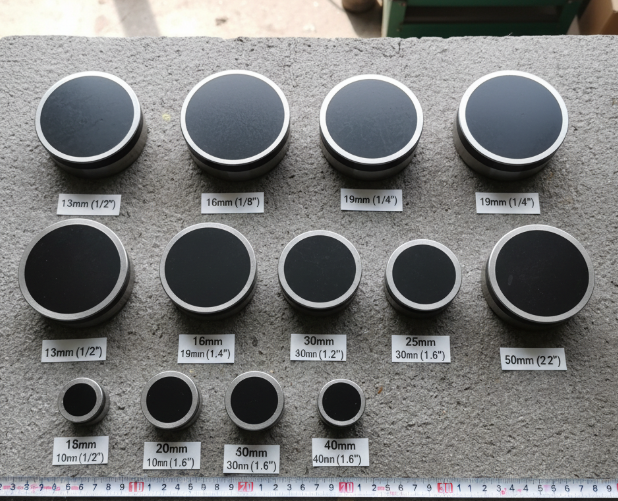
If you are doing drill bit repair (Repairing old bits), don’t just take the removed old piece to measure the size-it must be worn out. Be sure to measure the tooth socket (Pocket).
According to my experience, the size of the tooth socket of many old drill bits is often too large due to wear or previous repair and grinding. If you don’t pay attention at this time, plug a standard film into it and it will loosen. In this case, remember to order “enlarged” (Oversized) composite sheets with manufacturers, such as +0.1mm in diameter, so as to ensure interference fit and stable welding.
Based on the data we ran from different lithology (Lithologies) sites, the choice of size directly determines whether you “eat soil” or “gnaw bones”:
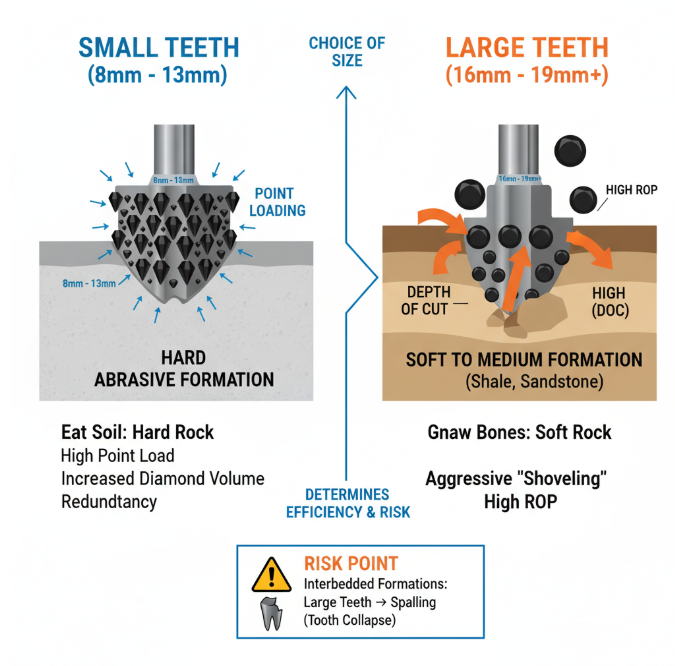
Most of the time you choose the right size of the 1613, but it still collapses when you go down the well. The problem often lies in the chamfer.
About the Author: Mark Evans
“I am Mark Evans, a Senior Technical Product Manager with over a decade of hands-on experience in PDC manufacturing and application. From the sintering press to the drilling rig, I specialize in bridging the gap between factory tolerances and field performance, helping tool manufacturers and engineers optimize their drill bit designs with the right cutter specifications.”