 kingpdc


product search
search

Author:Danny E. Scott——PDC Cutter’s R&D engineers are from Element Six
Element Six, a subsidiary of the De Beers Group, is a global leader in synthetic diamond and superhard materials. Headquartered in the UK, it develops and manufactures products such as PDC cutters, industrial diamond tools, and semiconductor-grade single crystal diamond, serving industries from oil and gas drilling to precision machining, electronics, thermal management, and quantum technologies.
With decades of expertise in high-pressure high-temperature (HPHT) synthesis and advanced material innovation, Element Six is recognized as one of the world’s foremost pioneers in the PDC cutter industry, alongside US Synthetic.
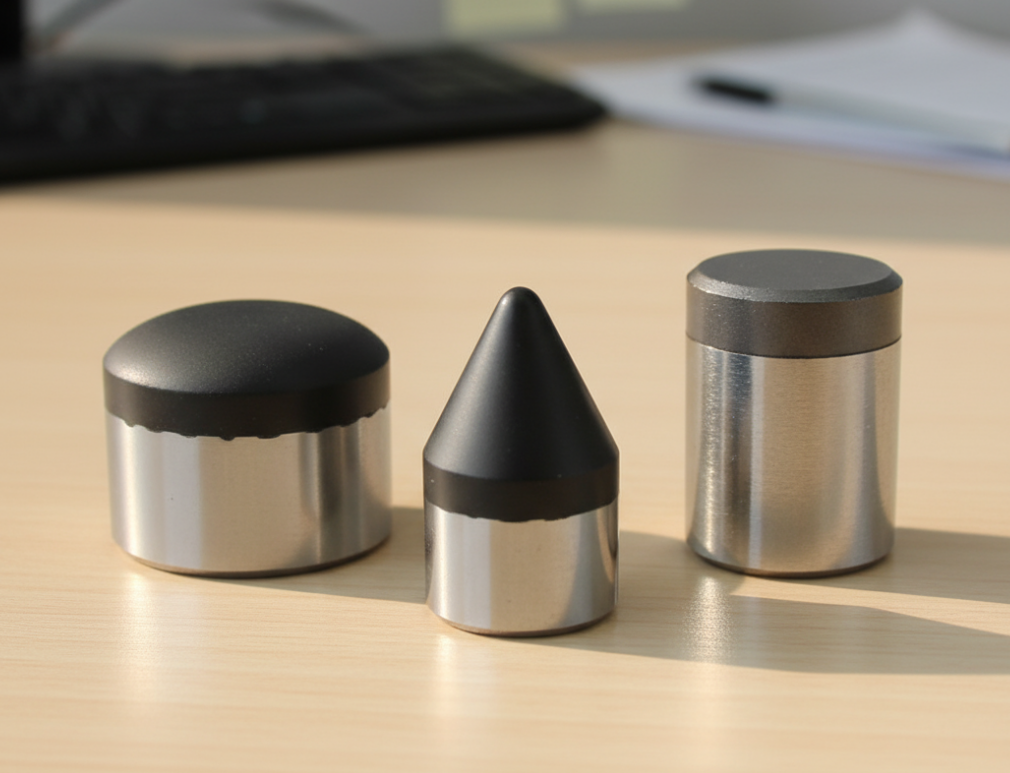
PDC cutter, the full name is the Polycrystalline Diamond Compact Cutter, it is not a simple diamond, but 1 a high-performance composite material.
In terms of material composition, PDC Cutter is mainly composed of two parts: a layer of diamond powder layer and a layer of tungsten carbide substrate. Imagine sintering selected diamond micropowders with a tough tungsten carbide substrate at extremely high temperatures and pressures. This process is like putting a strong “armor” on the diamond, which greatly improves its performance.
The wear resistance and hardness of traditional carbide cutting teeth are often inadequate in the face of some extreme formations. The emergence of PDC Cutter has completely changed these 1 situations. The diamond layer gives the cutting tooth unparalleled hardness and wear resistance, which means that it can maintain a longer service life and higher drilling efficiency when drilling into hard, highly abrasive formations. At the same time, the tungsten carbide substrate provides excellent toughness and impact resistance, effectively preventing the cutting teeth from chipping under complex working conditions.
Simply put, the advantage of PDC Cutter is that it combines the ultra-high hardness of diamond with the excellent toughness of tungsten carbide, creating a 1 synergistic effect that makes it perform well in extremely harsh drilling environments.
Of course, PDC cutters come in a variety of shapes to suit different formations and drilling needs.
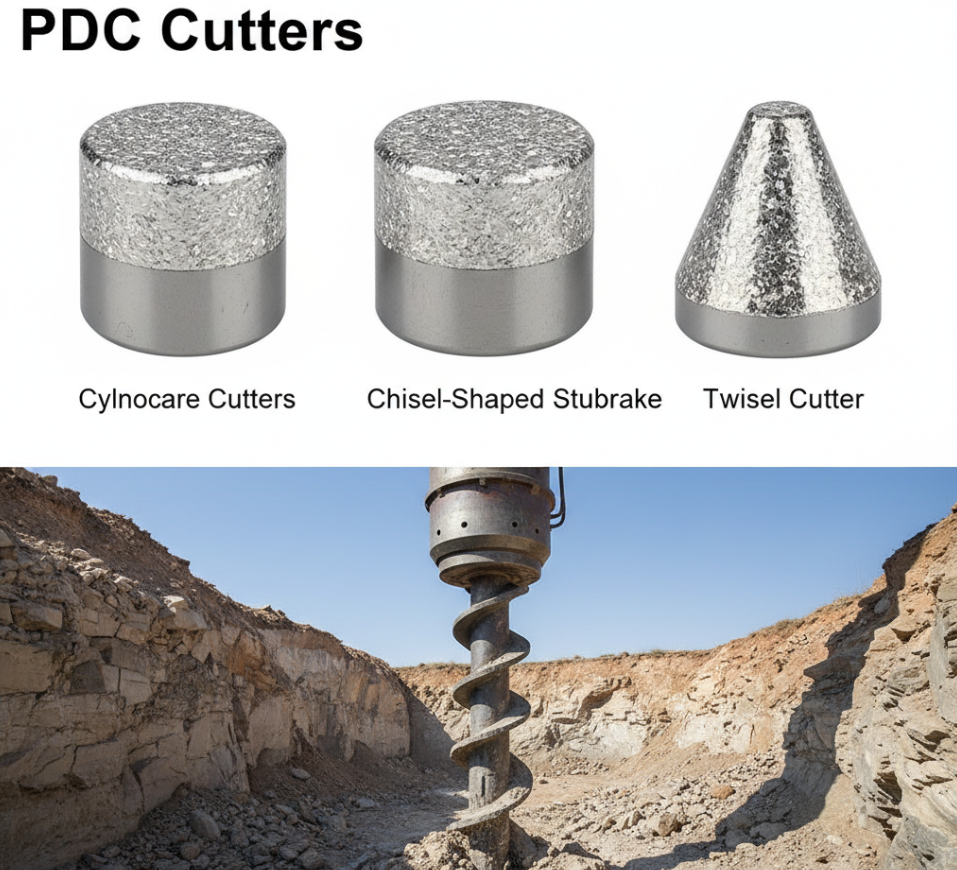
Design concept: This is our most commonly used basic shape. Simply put, it is the pursuit of maximizing the cutting area to provide stable and efficient cutting force. This design is to break rock in the most direct and effective way in the middle and hard strata.
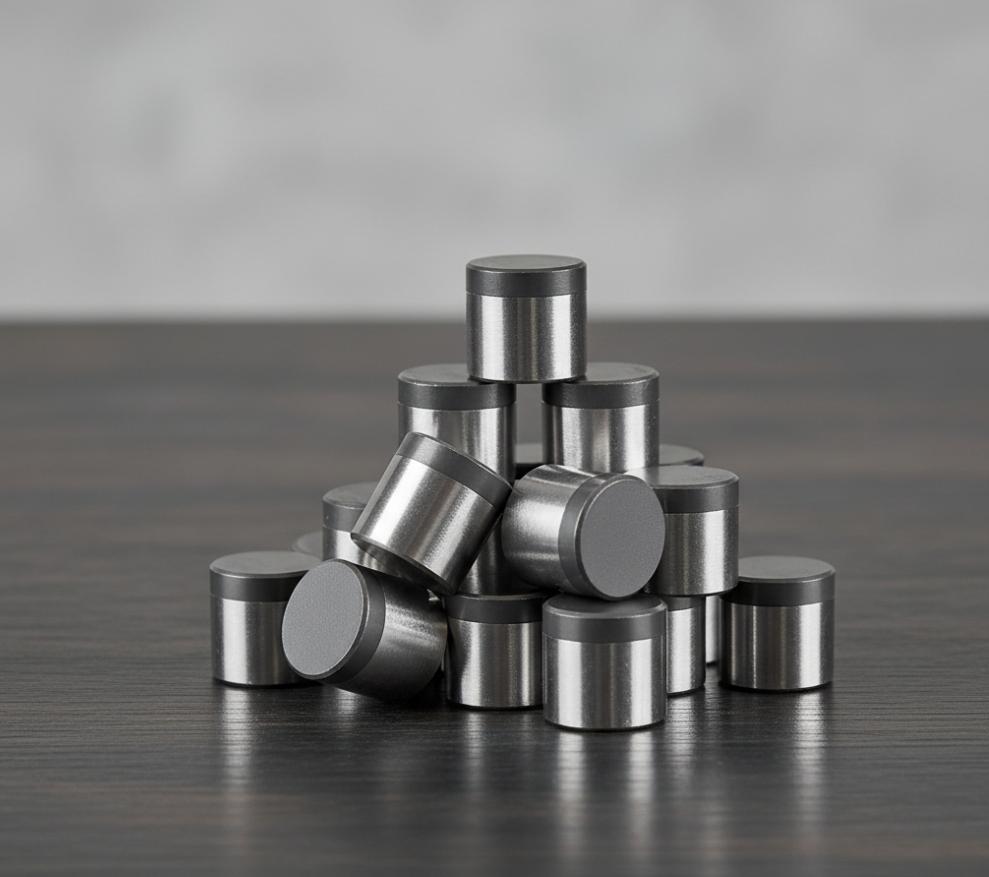
Application scenario: In my opinion, it is synonymous with drilling efficiency. When you want to drill quickly and get a high Rate of Penetration, flat cutting teeth are often the first choice.
R & D challenge: Although it may seem simple, it is not easy to make it perform well. Our biggest headache is wear uniformity and thermal stability management. PDC bits work under high-speed rotation and high pressure, and the cutting teeth will generate a lot of heat. How to effectively dissipate heat and avoid local overheating leading to failure is a problem we have been overcoming. At the same time, we also need to fine-tune the cutting angle and back angle to optimize performance to ensure that it can play the maximum effect in different formations.
Design concept: Compared to the “surface” contact of plane cutting teeth, the conical PDC Cutter is characterized by its sharp geometry, which can exert a greater stress per unit area on a smaller contact area. This design is meant to better rupture hard, dense strata.
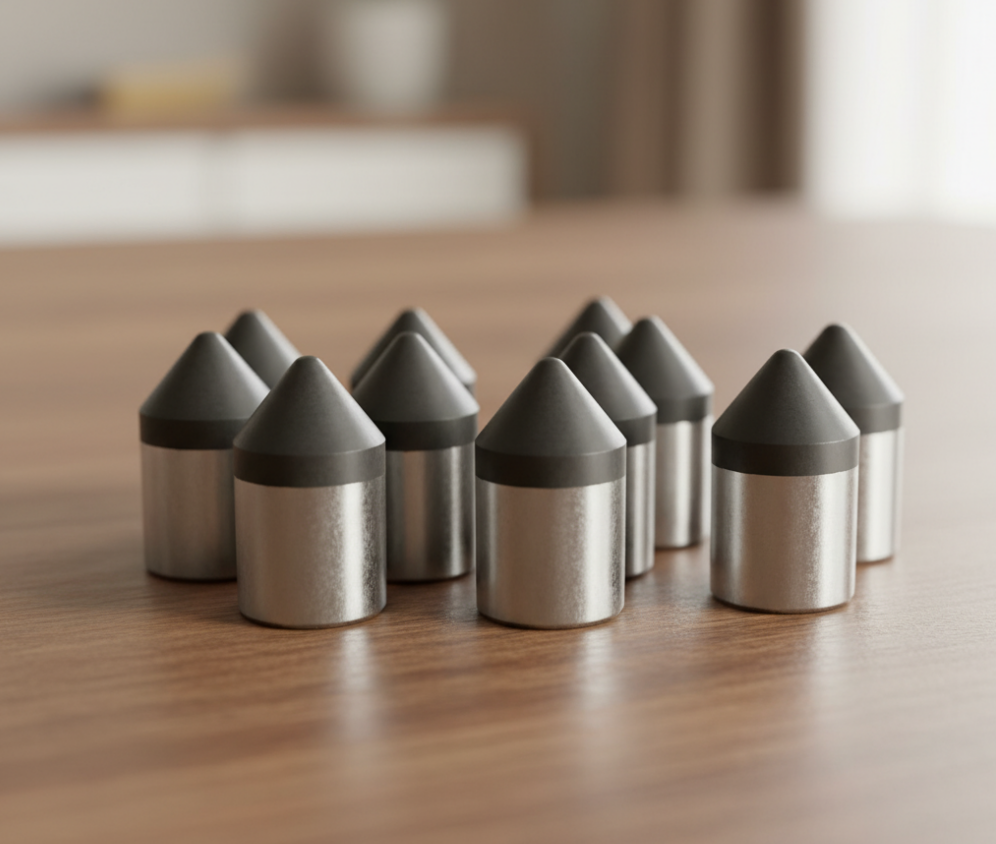
Application scenario: When we face hard strata or those with extremely abrasive strata, the impact resistance advantage of conical PDC Cutter is highlighted. It can effectively reduce the risk of PDC Cutter damage and extend the drill bit life.
R & D challenges: The key is how to find the best balance between sharpness and damage resistance. We always want to make it sharper, but excessive sharpness may in turn cause it to break more easily under impact. We will also study different conicities, such as hemispherical or parabolic shapes, and these subtle geometric changes can have a significant impact on cutting efficiency and lifetime.
Design concept: I personally think that this shape is the 1 clever combination of plane and cone advantages. The arc-shaped transition can provide stronger impact resistance and longer life, while maintaining good cutting efficiency.
Application scenarios: complex formations, alternating formations, these are very complex situations. Oval/arc PDC Cutter can effectively reduce vibration during drilling and improve drilling stability.
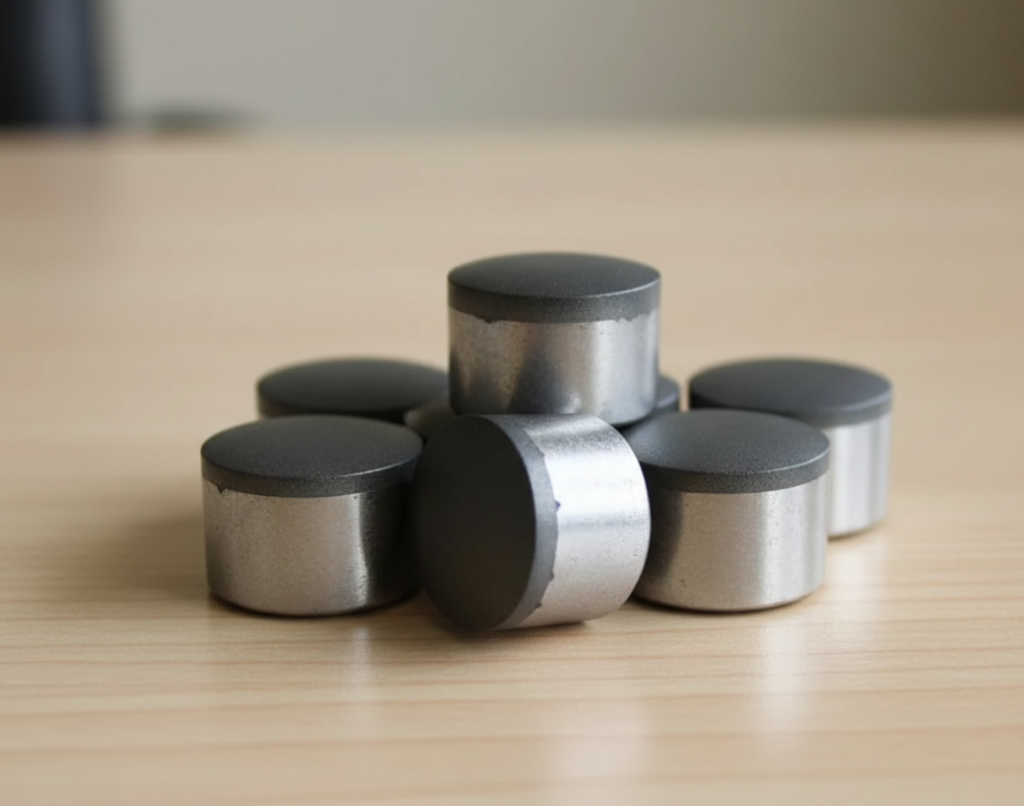
Development challenge: Precise control of this geometry is key. We have to ensure that each arc, each surface can achieve the best stress distribution, in order to really play its advantages. For example, the design of radian will directly affect the effect of debris removal and the self-sharpness of PDC Cutter, which are important engineering details that we must consider.
Design concept: These PDC Cutters are often designed with large brain holes, they are asymmetric or complex geometries, and are specifically designed to address specific drilling challenges, such as the need for better lateral cutting capabilities, or to solve certain twisting problems.
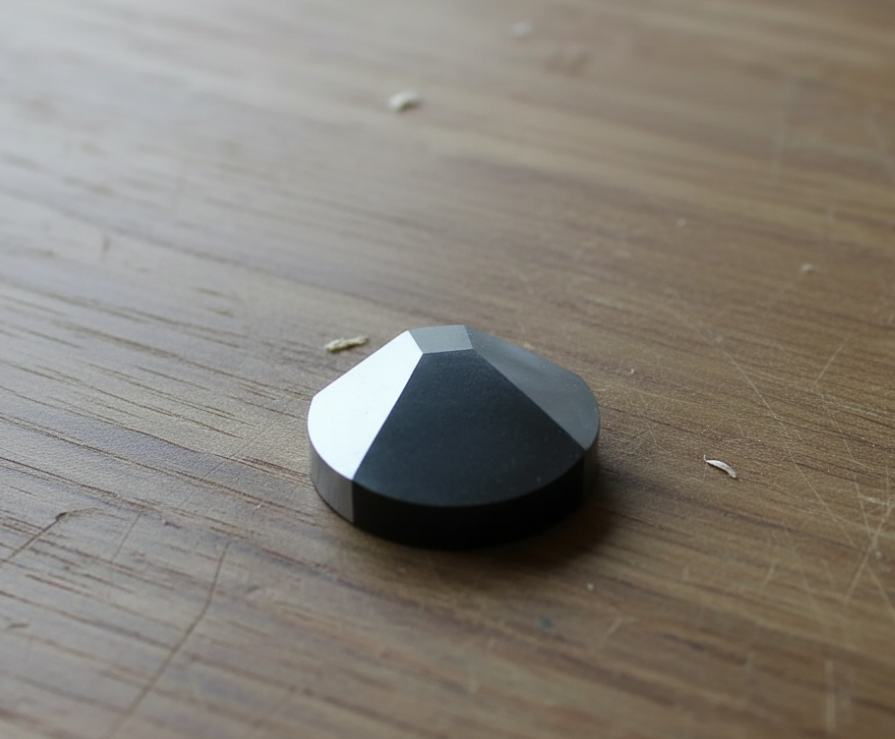
Application scenario: when guiding drilling, expanding borehole, or encountering some special formations, it is necessary to break through the traditional cutting method, the special-shaped cutting tooth will come in handy.
R & D challenges: The complexity of the manufacturing process is the primary challenge. Secondly, it needs a lot of calculation and experiment to accurately simulate its force in the formation and evaluate its rock breaking mechanism. For example, cutting teeth with grooves, bumps or polygonal edges change the way rocks break, but how to optimize these details requires in-depth engineering analysis.
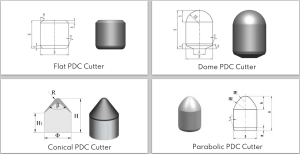
KingPDC Shaped PDC Cutters – Bulk Supply Solutions for High-Performance Drilling Across Multiple Applications
View details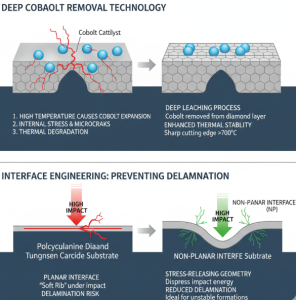
Maximize ROP With Our PDC Rock Cutter For Oil & Gas. Engineered For Impact Toughness & Thermal Stability.
View details
In the constantly evolving field of directional drilling, efficiency, precision, and reliability are the cornerstones of success. At the heart of every high-performance drill bit lies a small yet powerful component — the PDC Cutter for di...
View details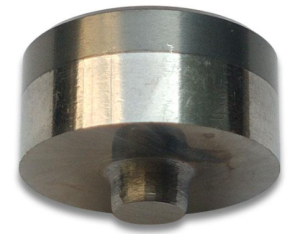
Step Shaped PDC Cutters Dealer Teaches You How To Choose The Right PDC Drill Bit Based On Scenarios And Work Conditions.
View details